Empty shelves cost retailers more than most owners realise. A landmark IHL Group study, first published in 2015 and still widely cited in retail research, estimated that retailers worldwide lose $1.75 trillion a year to overstocks, out-of-stocks, and preventable returns combined, with more recent IHL projections putting 2026 losses from inventory distortion at a similar scale. For a retailer or trader, a chunk of that loss is simple: a customer walks in ready to buy, the shelf is empty, and they walk out and buy from someone else.

Stock financing exists to close that exact gap. Instead of waiting until you've saved enough to restock, you borrow against the sale you're about to make, buy the inventory now, and repay once it sells. Here's how Nigerian retailers and traders are using it to keep shelves full, what it actually costs, and how to pair it with smarter inventory planning so you're financing the right stock, not just more stock.

The Real Cost of Running Out of Stock
It isn't only lost sales. A customer who can't find what they came for often doesn't come back at all, and the cost of that loss trust rarely shows up on a balance sheet the way a missed sale does.
It isn't just a global problem either. Researchers Eginiwin Joseph Ese and Apinoko Raphael of the Federal Polytechnic Orogun, Delta State, studied supermarkets and water producers across Delta State and found that how well a business manages its inventory accounts for roughly 71% of the difference in profitability between them, according to their 2024 study in the International Journal of Economics and Financial Management. Their finding states getting stock levels right isn't a side issue for a Nigerian retailer, it's one of the biggest factors in whether the business turns a profit at all.

What Stock Financing Actually Does for Retailers and Traders
Stock Financing is built specifically for retailers and traders who need to restock quickly and repay from what they sell. Rather than waiting on savings to rebuild inventory, you buy now and repay from your sales proceeds as they come in, structured around your typical sales cycle, not a fixed, unrelated repayment date.
It is designed for businesses of any size that sells physical goods, from small traders to established retail operations, and it doesn't require a long-term formal supplier agreement. Usually, a clear supplier detail and product list is enough. You can read the full product details on the Stock Financing page.

What It Actually Costs [Worked Example]
To see how the math works, here's a simple illustration using sample numbers, not Credit Direct Business's published rates. Your actual rate, fees, and repayment terms depend on your credit assessment.
Say a trader borrows ₦2,000,000 to restock ahead of a busy selling period, at an illustrative monthly rate, and expects to clear the stock and repay within two months:
- Interest: at a sample 4.5% monthly × 2 months × ₦2,000,000 = ₦180,000
- Management fee (sample 1% flat, one-time): ₦20,000
- Key man insurance (sample 0.5% flat, one-time): ₦10,000
- Total repayment: ₦2,000,000 + ₦180,000 + ₦20,000 + ₦10,000 = ₦2,210,000
That's the shape of the cost: interest on what you borrowed, plus a couple of one-time fees, repaid from what the stock earns once it sells. Your real offer will carry Credit Direct Business's actual rate and fees, so confirm the final figures on your Loan Agreement Form before accepting.
Pairing Financing with Inventory Planning Software and Demand Prediction
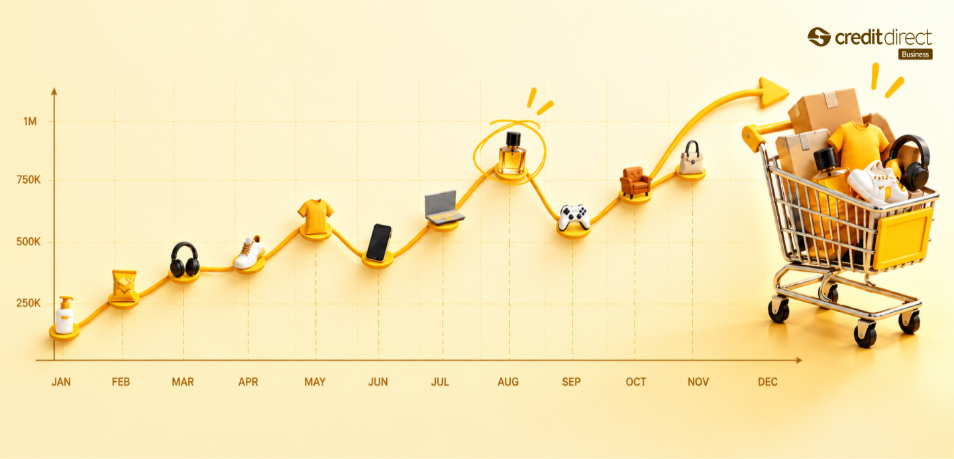
Financing solves the cash problem, not the guessing problem. That's what inventory planning software and demand prediction tools are for: they look at your past sales to predict what will sell next, so you restock based on evidence instead of a hunch, and your borrowed cash goes toward stock that actually moves.
Used together, financing and forecasting cover both ends of the problem: you stop running out of your best sellers, and you stop tying up borrowed cash in stock that sits on a shelf. Before you decide how much to borrow, it's worth a quick check of which items actually move.
How to Apply for Stock Financing
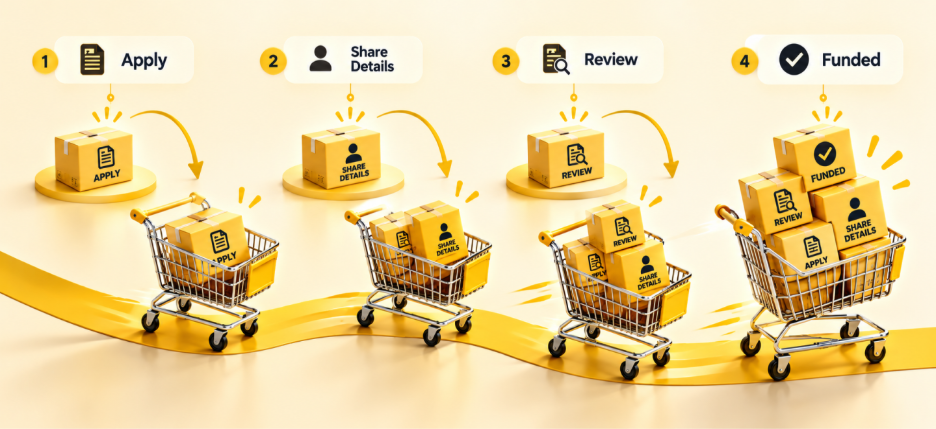
- Apply online and select Stock Financing.
- Share your verification details along with supplier and product documentation.
- Our team reviews everything and returns a decision.
- Accept your offer and receive funds directly into your business wallet, ready to purchase stock.
What You'll Need to Apply
- CAC certificate
- Director's ID and BVN
- Twelve months of bank statements
- A recent utility bill
- A signed direct debit mandate
- Supplier details and product list
- Invoice for the goods, warehouse address, and stock evidence
Frequently Asked Questions
Is stock financing only for large retailers?
No. It's designed for businesses of any size that resell physical goods, from small traders to established retail operations.
What if I don't have a formal supplier agreement?
A clear supplier detail and product list is required, but this doesn't need to be a long-term formal contract. Speak with your relationship manager if you're unsure what qualifies.
How is stock financing repaid?
Directly from the proceeds of the stock you sell, structured around your typical sales cycle.
Do I need inventory planning software to use stock financing?
No, they're separate tools. But using a simple inventory or demand forecasting tool alongside financing helps you borrow for the stock that will actually sell, rather than restocking by guesswork.
How much can I borrow for stock financing?
Amounts and tenure depend on your credit assessment and typical sales cycle. Confirm current limits when you apply.

Don't Let Empty Shelves Cost You the Sale
Every stockout is a customer who found what they needed somewhere else. If low stock has cost you sales before, that's a fixable problem, not a cost of doing business.
Apply for Stock Financing today, and for a full comparison of every business loan available to Nigerian SMEs, see our complete guide to business loans in Nigeria.