




The gadget you actually need, a phone for work, a laptop for school, a fridge for a new apartment, often costs more than what's sitting in your account at the moment. That gap, between the item in front of you and the lump sum a store wants upfront, is the entire reason Buy Now Pay Later financing exists in Nigeria. Some people know this as “pay small small”. You pay a fraction of the price today, walk out with the item, and spread the rest over the following months.
This guide explains how BNPL gadget financing actually works in Nigeria: which items it typically covers, what it costs, how a lender decides what you qualify for, and how to tell a properly regulated provider from an app you should avoid. The focus is on Credit Direct Checkout, but the mechanics apply to instalment gadget financing generally.

What Is Buy Now Pay Later for Gadgets, and How Is It Different From a Personal Loan?
Buy Now Pay Later for gadgets is financing tied to a specific purchase, arranged at the point of sale, where the merchant gets paid in full immediately, and you repay the lender in instalments. A personal loan, by contrast, pays cash into your account that you can spend on anything.
The practical difference shows up in three places when using Credit Direct Checkout.
First, speed: BNPL approval happens in the checkout flow, often in minutes, because the loan amount is fixed to the item in your cart.
Second, structure: you make a down payment (Credit Direct Checkout requires only 20% to 25% of the price, depending on the merchant, category, or promotion) and finance the balance, rather than borrowing 100% of the amount. Compared to other platforms, this is a lot more flexible as you don’t need to deposit 50% of the item's value before getting it.
Third, use: a personal loan can cover rent, medical bills, or a business expense; BNPL is locked to the transaction it financed. If you need cash rather than a product, a personal loan is the better option. If you specifically need a gadget now and want to spread the cost, BNPL is built for exactly that.
What Gadgets Can You Actually Buy With BNPL in Nigeria?
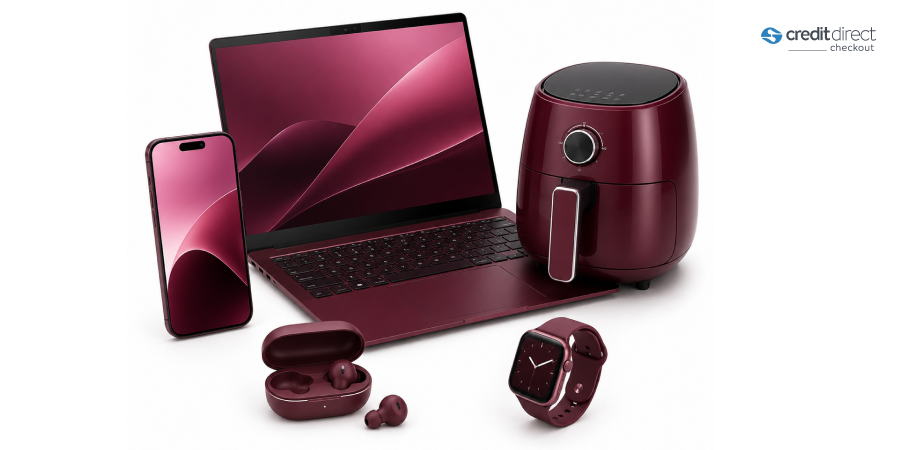
BNPL in Nigeria covers a wide range of electronics and household gadgets, not just phones. The categories that show up most often across partner merchants are:
Smartphones remain the single largest category. According to the 2025 Nigeria Credit Landscape Report, smartphones account for 70% of all BNPL gadget transactions, with Android devices holding 81.4% of that share.
Mid-range Android phones, priced in the report's data at roughly ₦130,000 to ₦280,000, sit at the sweet spot between functionality and what most buyers can actually finance. The remaining categories (laptops, appliances, power equipment) make up a smaller but fast-growing share, driven by the same logic: a genuinely needed item that a lump-sum price puts out of reach this month.
Why BNPL Demand for Gadgets Is Rising in 2026
The core pressure behind BNPL's growth is that pay has not kept pace with prices. Nigeria's minimum wage moved from ₦30,000 to ₦70,000 in 2024, but headline inflation has run well above that increase in the years since, meaning the real purchasing power of most household incomes has shrunk even where naira salaries have technically gone up.
Inflation has eased from the 30%-plus peaks of 2024 to around 16% by mid-2026, but that's a slower rate of erosion, not a reversal of it: prices are still rising faster than most incomes, and naira depreciation continues to push up the cost of imported phones, laptops, and appliances specifically, since almost none of them are manufactured domestically.
Against that backdrop, gadget prices have also gained tighter enforcement of an existing tax, which compounds the pressure rather than causing it outright. Nigeria's standard VAT rate has stayed at 7.5% through the 2025 tax reforms, but new e-invoicing rules mean that rate is now applied consistently at the point of sale, rather than slipping through informally as it sometimes did before.
On a device priced at ₦500,000, that's an additional ₦37,500 now showing up clearly on the receipt where it might once have been absorbed or hidden. Combined, weaker real income and a more consistently enforced VAT mean more of the sticker price is now unavoidable at the exact moment take-home pay is stretched furthest, which is precisely the gap BNPL is built to spread out rather than absorb in one payment.

How Does BNPL Gadget Financing Actually Work, Step by Step?
BNPL gadget financing works by checking your eligibility once, then letting you shop repeatedly against that limit. With Credit Direct Checkout, the flow looks like this:
- Check your limit. This takes a few minutes on the Credit Direct website and does not affect your credit score.
- Pick your item, in a partner store, on a merchant's website, or through a verified social media storefront. This applies whether you're buying a phone, a laptop, or a fridge.
- Select Checkout at payment and submit the few details required for verification (bank account details, a valid ID, BVN, and an active debit card to set up repayment).
- Make your down payment. The merchant receives full payment for the item immediately; you are not waiting on anyone.
- Repay the balance in equal monthly instalments over the tenure you chose, typically up to six months.
Because the merchant is paid in full at the point of sale, there is no partial delivery and no negotiation with the store about instalments. That risk sits with Credit Direct, not the merchant, which is why BNPL providers are selective about who qualifies and how much they extend, regardless of what category of gadget you're financing.
How Much Does It Actually Cost? Down Payment, Tenure, and Interest Explained
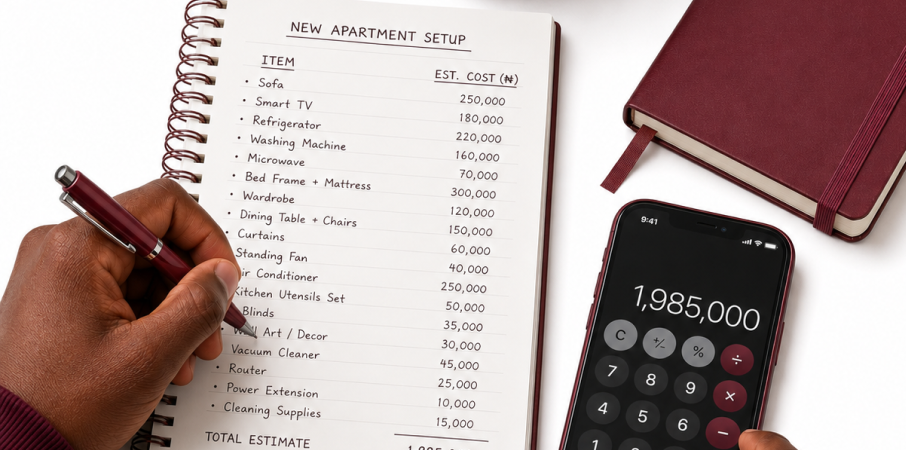
BNPL gadget financing costs you a down payment plus interest on the financed balance, spread across your chosen tenure. Three numbers determine your actual cost:
Repayment Tenor: Why Most Nigerians Choose the Longest Option
Most Nigerians financing a gadget through BNPL choose the maximum available tenor, and the data explains why. Across BNPL transactions in 2025, 61.5% of customers selected a repayment period of 5 or 6 months, with 42.7% choosing the full 6 months. Only 2.5% opted for a one-month repayment cycle.
Source: The 2025 Nigeria Credit Landscape Report.
This pattern isn't about people wanting to pay more interest for its own sake. It reflects a simple cash flow reality: stretching a purchase to the longest available tenor keeps the monthly instalment small enough to sit comfortably alongside rent, transport, and everyday costs, whether the item being financed is a ₦200,000 phone or a ₦1,500,000 generator. The trade-off is real, and it's worth doing the maths before you choose: a shorter tenure costs less overall if your monthly cash flow can carry it.
Do You Need a Steady Salary to Qualify for Gadget BNPL?
You don't need payslips or formal employment documentation to qualify for BNPL gadget financing the way you might for a larger personal loan; what you typically need is a bank account with consistent activity, your BVN, and an active debit card for repayments. This is one of the more accessible forms of credit in Nigeria precisely because the loan amount is smaller, the tenure is shorter, and the item itself has resale value that lowers the lender's risk.
That accessibility is also why BNPL has become a genuine entry point into formal credit for people who haven't borrowed before. A first successful repayment cycle, whether on a phone, a laptop, or an appliance, is tracked and reported through Nigeria's credit bureaus under the Credit Reporting Act 2017, and it builds the exact repayment history a larger personal loan or salary advance will later look for.

How to Tell a Trustworthy BNPL Provider From a Predatory One
You judge a BNPL provider by its licensing, its transparency, and how it recovers repayment, not by how fast it approves you or how large a gadget it lets you finance. Nigeria's Federal Competition and Consumer Protection Commission introduced the Digital, Electronic, Online, or Non-Traditional Consumer Lending Regulations in 2025, which require any digital lender to disclose loan terms clearly before you complete a transaction, across whatever channel you're using to shop.
A few markers of a properly regulated provider:
- It discloses total cost upfront, before you accept, not after.
- It's backed by a licensed institution. Credit Direct, for instance, is authorised and regulated by the Central Bank of Nigeria and has operated since 2007 as a subsidiary of FCMB Group Plc.
- It recovers repayment through the channels you agreed to, not through pressure on your contacts or public embarrassment.
Set that against the patterns worth watching for: an app that asks for access to your phone contacts as a condition of financing, or one that won't show you the full repayment schedule before you commit, whatever gadget you're buying. Those aren't the practices of a regulated lender, and recognising them upfront is what lets you shop with confidence rather than second-guessing every step afterwards.
How to Apply for BNPL Gadget Financing With Credit Direct Checkout
You can check your Checkout limit and start shopping in a few minutes, without paperwork, through any of these routes:
- In-store or online at a partner merchant. Pick your item, select Credit Direct Checkout at payment, and follow the verification prompts. This works the same for a phone, a laptop, or a large appliance.
- Through a merchant's social media storefront. Request a payment link, submit your documents, and confirm your limit the same way.
- Via the Credit Direct app or website, if you want to check your limit before you start shopping around.
You'll need an active bank account, a BVN-linked phone number, and a working debit card set up for repayments. Existing Credit Direct customers typically move through this faster, since much of the verification is already on file. For a list of partner stores currently accepting Checkout across categories, see our guide to 8 stores that allow buy now pay later in Nigeria.
Frequently Asked Questions
Q: How does buy now pay later work for gadgets in Nigeria? A: You make a down payment (commonly 20% to 30% of the item's price), the merchant is paid in full immediately, and you repay the remaining balance to the lender in monthly instalments, typically over one to six months.
Q: What items can you buy with buy now pay later in Nigeria? A: Most BNPL providers cover phones, laptops, TVs, home appliances such as fridges and air conditioners, power equipment like generators and inverters, and smaller electronics and accessories. Smartphones remain the largest single category financed this way.
Q: Do you need a credit history to buy a gadget on instalments in Nigeria? A: No prior credit history is required to start. What's typically needed is a bank account with consistent activity, a valid government ID, and an active debit card. A successful repayment cycle also helps build the credit history that larger loans later assess.
Q: Is buy now pay later safe in Nigeria? A: It is, provided you use a provider licensed and regulated by the Central Bank of Nigeria or compliant with the FCCPC's 2025 digital lending regulations, which require upfront disclosure of loan terms. The risk sits with unregulated apps that hide costs or use aggressive recovery tactics, not with the financing model itself.
Q: Is Buy now pay later better than waiting and paying the full price at once? A: It depends on your timeline and cash flow. Paying in full avoids interest entirely if you can genuinely wait. BNPL makes sense when the item is needed now, the interest cost is clear upfront, and the monthly instalment fits comfortably within your budget without displacing other essential costs.
Q: What is Credit Direct Checkout? A: Checkout is Credit Direct's buy now pay later product, letting you shop at partner merchants and pay for phones, laptops, appliances, and other gadgets in instalments of up to six months, with credit of up to ₦1,000,000 available depending on your profile.
Q: How much can I finance with Credit Direct Checkout? A: Your exact limit depends on your profile and is confirmed when you check eligibility, up to a stated maximum of ₦1,000,000. Checking your limit is free and does not affect your credit score.
Q: What happens if I miss a Checkout instalment? A: A missed instalment may affect your credit history and eligibility for future financing. If you expect to miss a payment, settling it as soon as possible limits the impact; our article on what happens if you don't pay your loans walks through this in more detail.
Your Next Step
The gadget you need, whether it's a phone, a laptop, or a fridge for a new place, doesn't have to wait for a full month's pay to arrive at once. Check your shopping limit, compare the monthly instalment against what your budget can carry at a few different tenures, and shop with a merchant that's already in the Credit Direct network. The math takes two minutes; the item is in your hands the same day.

%20compressed.png)