




A client requires sixty days to pay an invoice you have already delivered. Stock runs low right before your busiest selling week. A contract lands on your desk, but fulfilling it costs more than you currently have in the account. Every Nigerian business owner hits a moment like this, and the ones who handle it well are usually the ones who already know which type of financing actually fits the problem.
It does not have to feel like an emergency measure. Business financing is money your business borrows to cover operations, growth, or short-term cash needs. It works differently from a personal loan because it is assessed and repaid based on the business itself, using signals like your bank statement history and revenue, not your personal finances.
In Nigeria, this falls into two groups: debt financing, where you borrow and repay with interest over time, and equity financing, where you raise money by giving up a share of the business. This guide focuses on debt financing, the loan products Nigerian SMEs use most, because they put cash in your account fast without giving up any ownership. The real skill is not deciding whether to borrow. It is matching the right loan to the situation in front of you.

Types of Business Loans in Nigeria
Credit Direct Business offers four core loan products, and each one is built around a different business need. We have written about each in detail on its own page, so here is the short version to help you see which one fits before you read further.
None of these four demands traditional collateral. Documentation, a guarantor, or the buyer's payment routing does that job instead, which is worth knowing if you are researching how to get business financing without collateral in Nigeria. For a closer look at how business owners are actually using these products, see 4 Business Loans for Nigerian Business Owners.
Options like bank overdrafts, asset finance, and equity investment also exist, but they tend to move slower, need an existing banking relationship, or cost you a share of the business. That is why most growing SMEs start with one of the four above.
How to Choose the Right One
A few quick questions point you to the right product almost immediately:
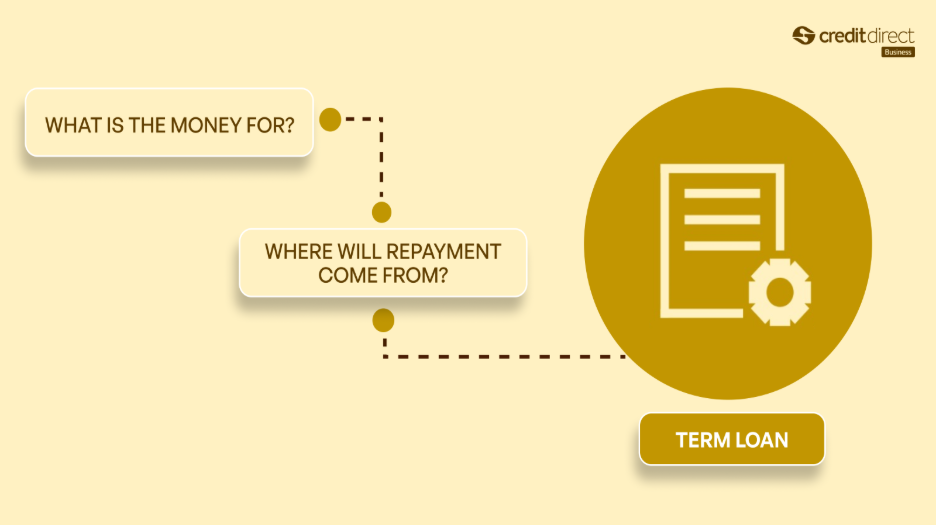
- What is the money for? General running costs point to a term loan. Inventory points to stock financing. A specific order points to LPO or contract financing.
- Where will repayment come from? Your general revenue, or one specific sale, order, or invoice? Match the loan to that answer.
- Do you have collateral? If not, that is not a barrier here. All four products work without it.
If your need spans more than one of these, speak with a relationship manager. Eligible businesses can apply for more than one loan product at a time.
What You'll Need to Apply
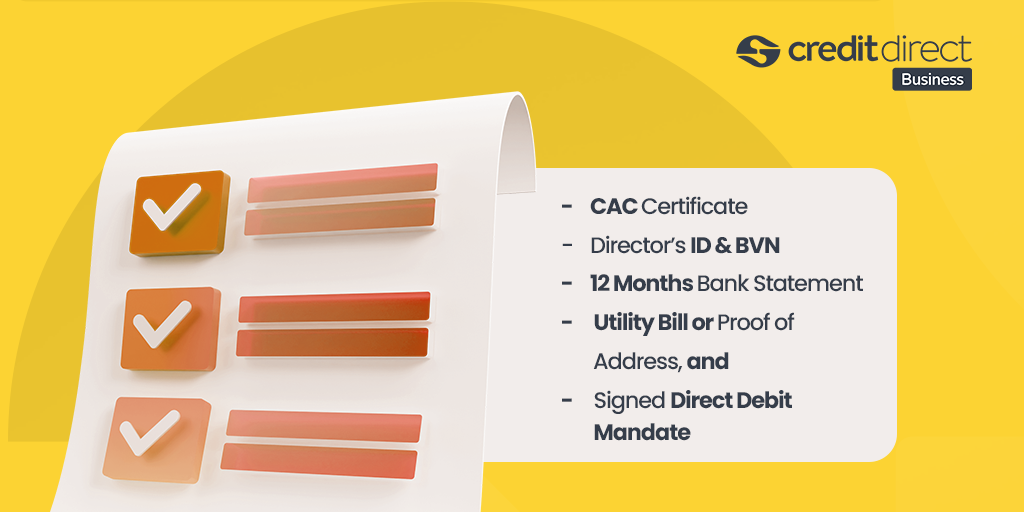
Every product asks for the same core set: a valid CAC certificate, director identification and BVN, twelve months of business bank statements, and a recent utility bill. A few extras apply depending on the loan, such as supplier details for stock financing or an accepted invoice for invoice discounting. You do not need an existing relationship with a lender to qualify. Your documents and banking history speak for you, which is why a first-time applicant can be assessed just as fairly as a returning one. For a full walkthrough, see our guides on SME loan eligibility and the documents checklist for business loans in Nigeria.
How to Apply for a Business Loan
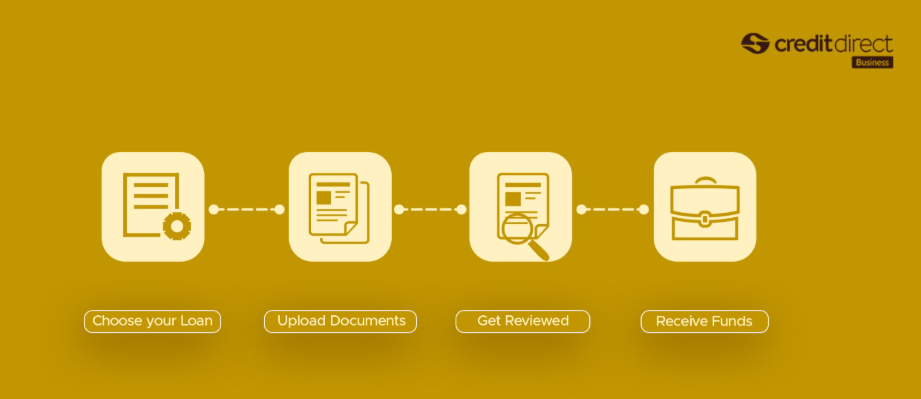
- Choose your loan type and state how much you need and what it is for.
- Verify your business by uploading the documents required for that loan type.
- Get reviewed. We typically respond within 24 to 48 hours..
- Accept your offer and receive funds directly into your business wallet.
Frequently Asked Questions
What is the easiest business loan to get in Nigeria?
For most registered SMEs with clean bank statements, a term loan or stock financing from Credit Direct Business is the most straightforward, since neither needs traditional collateral.
Can I get a business loan without collateral in Nigeria?
Yes. All four Credit Direct Business loan types work without traditional collateral, using documentation, a guarantor, or domiciliation of proceeds instead.
How much can an SME borrow?
Term loans and stock financing range from ₦500,000 to ₦20,000,000. LPO/contract financing and invoice discounting range from ₦500,000 to ₦20,000,000, subject to your credit assessment.
How long does approval take?
Typically 24 to 48 hours from a complete application, provided your documents are submitted correctly the first time.
Do I need to be registered with CAC?
Yes. A valid CAC certificate is required across every loan type, alongside director identification, BVN, and bank statement history.
Can I apply for more than one loan product at once?
Yes. Eligible businesses can have multiple loans running, for example, a term loan for operations alongside invoice discounting for a client with outstanding invoices.

Ready to Fund Your Next Move?
You now know what term loans, stock financing, LPO and contract financing, and invoice discounting each do, and which one matches how your business actually earns and spends money. The next step is simple: stop guessing and get funded.
Sign up on Credit Direct Business today, pick the loan product that fits your need, and apply in minutes.


%20compressed.png)