




A few weeks ago, Olagoke Balogun, the founder and CEO of So Fresh, Nigeria's pioneer healthy food chain, spent a few hours teaching business owners something many of them ignore: how to manage cash flow as the business grows.
Mr Balogun has spent 16 years building So Fresh from a single store to 12 locations across 3 states. He has made payroll decisions at midnight, outsourced logistics to save a business that was quietly bleeding cash, and watched growth almost kill the very company he built.
He speaks about cash flow not as a finance concept but as a survival skill, and that is exactly how this webinar felt.
Here are the five most important things we learnt
1. Cash Flow Is Not What You Think It Is
Before teaching anything, Mr Balogun dismantled some assumptions most business owners carry unchallenged.
"Cash flow is not sales," he said. "Sometimes you don't collect all the money at once. Sales can happen, but it doesn't mean money has come in."
And the one that needed emphasis: "Cash flow is not money in the bank. Because guess what? A lot of the time, you look at money in the bank, but it is not your money. You may have 10 million Naira in the bank, and yet the business is already in trouble.”
This distinction matters because most Nigerian SMEs are measuring the wrong thing. They don’t discover the real issues in their business until the cash runs completely dry.
Cash flow is the actual movement of real money in and out of your business. Everything else is a story you tell yourself until that moment of reckoning arrives.
2. The Bucket Has Holes; That Is Normal
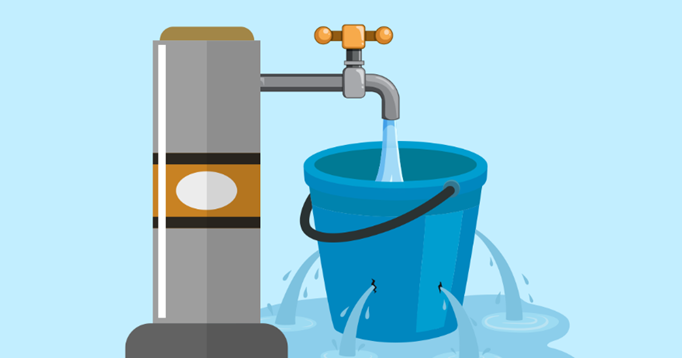
Mr Balogun used a bucket analogy throughout the session that cut through years of complicated business finance in a single image.
Your business is a bucket. Money flows in through sales. Money flows out through expenses, salaries, inventory, rent, taxes, advances, and everything else. The bucket will always have holes. The goal is not to eliminate the holes; it is to ensure more flows in than flows out.
He spoke from personal experience, not theory. "Going to bed, I did not know how I was going to pay for supplies, how I was going to pay for inventory, how I was going to renew rent. And I tell you, it is not a place you want to be as a business. It keeps you restless; it keeps you in a state of constant worry and frustration."
The practical takeaway: you must work both ends of the bucket simultaneously, increasing inflows while reducing outflows. Not one or the other. Both, at the same time, and consistently.
3. Your Biggest Cash Drain Might Not Be an Expense; It Might Be a Decision
One of the sharpest moments in the session came when Balogun described what happened at So Fresh some time ago. The company had a fleet of motorbikes handling deliveries. On paper, it looked like an asset. In practice, it was a daily cash drain: maintenance, breakdowns, bail money, and management time.
"My business was to sell food," he said. "So, guess what we did? We looked for a credible logistics partner. We sold all our bikes to them. I don't want to deal with that headache. I don't want that money to flow out of the business."
The question he asked them is worth asking about your own business today: "What are the things I am doing right now that I should not be doing, that are taking money?"
Reducing outflow is not just about cutting costs. It is about being honest about which activities belong in your business and which ones are quietly consuming it.

4. Growth Is Not the Goal; Planned Growth Is
This was arguably the most surprising thing Balogun said, and the one that drew the most visible response from attendees.
"Growth eats cash," he said plainly. "Growing too fast creates cash flow problems. You need money for marketing, raw materials, logistics, and new staff. Growth consumes money."
The issue is not growth itself; it is unplanned growth. Businesses chase revenue increase without calculating the cash required to fund them. By the time they realise the gap, they are already in a crunch.
His advice: at the end of every half-year or year, sit down and calculate what your growth goals will actually cost. "Ask yourself, how much money do we have? How much money do we need to raise? Can we do it in 6 months? Do we need 1 year, or do we spread it to 2 years? That is what planning does for you."
Growth that outruns your cash position is not success. It is a slower form of failure.
5. Cash in the Business Gives You Peace of Mind and That Is a Strategy
The final insight spoke to the personal experiences of business owners.
"I can tell you for free," Balogun said, "Cash in your business gives you peace of mind. It allows you to sleep well at night and wake up the next day knowing that you have what it takes to continue operating and running your business."
This is not a soft observation. Peace of mind is a business advantage. The business owner who is not lying awake worrying about next month's salaries makes better decisions, sees more clearly, and responds to opportunity faster than one whose mental bandwidth is consumed by survival anxiety.
Building a cash buffer, with just 5 to 10% of monthly profit set aside somewhere it earns interest, is how you stay in the game long enough to win it. It’s how you build a generational business.
This highlighted the importance of Credit Direct Business, a wallet that earns 15% per annum on all deposits. It ensures that even your buffer continues to earn inflows for the business, strengthening your cash flow.
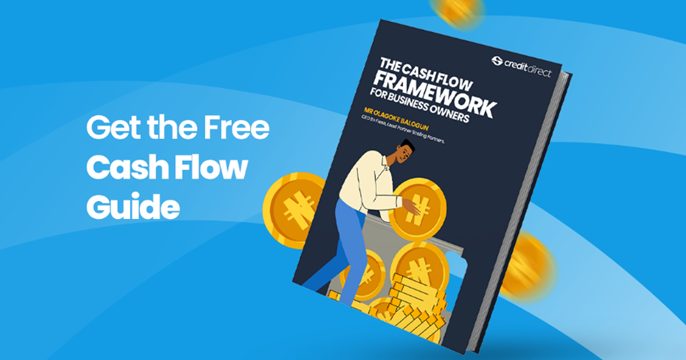
The Free Cash Flow Guide
At the end of the session, Balogun described a cash flow guide that he and the Credit Direct team built together.
"It is more detailed than today's webinar," he said. "It gives specific strategies on how to manage your cash flow. In fact, in that guide, I shared one of our biggest cash flow stories at So Fresh — when the business was almost at a point of collapse, and what we did to bring it back."
The guide includes a cash flow management system, the Deadly Cash Flow Killers, a weekly cash planner, emergency response frameworks for businesses already in a crunch, and the 5 numbers that tell you whether your business will survive the next 90 days.
"Take time to go through it," he said. "You will be absolutely glad that you did."



%20compressed.png)