




There’s a thing where men in new relationships start feeling financial pressure because of how much they spend on their partner.
Beyond this, both men and women have experienced seeing other couples online pulling out all the stops and spending large sums of money on their partners.
I also got into a relationship earlier this year, and it has been very fulfilling to be in love.
All of this keeps bringing up one question: “How much should I be spending on my girlfriend?”
This question isn’t just for men, though; I know women also wonder how much to spend on their men. So, should we all be setting aside a percentage of our income for our partners, or if you’re a lover boy like me, should we give them every single thing we earn?
When I asked the financial experts on the Credit Direct team, these are the answers they gave me.
I spoke to Ademidun Shogo, a Financial Analyst on the Research team.

Should I Give My Partner All My Money
The answer is a clear no.
It is wonderful that you are in love and want to show you care. But you almost certainly have financial needs beyond your partner. You need to invest, pay for essentials, and meet obligations like rent and taxes. Handing everything to your girlfriend or boyfriend puts you under enormous pressure, and that pressure will harm your relationship over time.
Financial experts consistently make one point above all others: spend less than you earn. It sounds obvious, but it is the foundation everything else is built on. If showing love pushes you into a place where you are spending more than you make, that is not generosity. It is a problem waiting to happen.
So, How Much Should You Actually Spend on Your Partner?
Here is the honest answer: there is no magic number. But there is a healthy way to think about it.
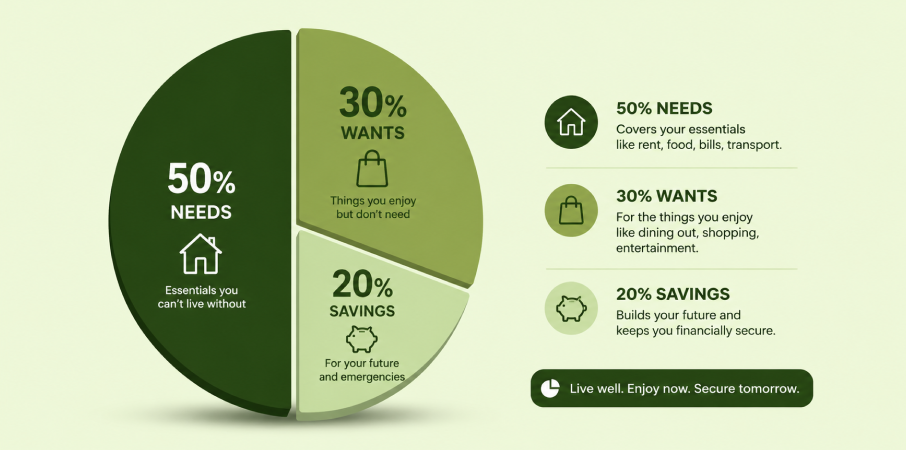
A widely used budgeting framework is the 50/30/20 rule. You put 50% of your income toward needs: rent, food, transport, bills. You put 30% toward wants: entertainment, eating out, and yes, the things you do and buy for your partner. And you save or invest the remaining 20%.
Using this framework, spending on your partner comes out of your "wants" bucket, the same 30% that covers your own enjoyment of life. That is a useful mental model. It means the question is not "how much should I spend on them" in isolation. It is "how do the two of us fit into a life I can actually afford?"
Financial experts also generally recommend saving at least 20% of your income. So, a simple rule of thumb emerges: never let spending on your partner eat into the money you need for essentials or the money you have set aside to build your future. Love is important. So is next month's rent.
Does Spending More Mean You Love Them More?
This is the trap many of us fall into.
It is easy to believe that a bigger gift, a more expensive dinner, or a flashier gesture proves deeper love. But money and affection are not the same currency. Spending more does not mean loving more. It often just means spending more.
Some of the most meaningful things you can offer a partner cost nothing: your time, your attention, your consistency, showing up when it matters. When you tie your sense of being a good partner to how much you spend, you set yourself up for financial strain and set the relationship up for a shaky foundation. The goal is to show love in a sustainable way, not one that quietly bankrupts you.
Is There a Smarter Way to Show Love Than Just Spending?
This is where things get interesting.
Most of the money we spend on our partners disappears. A nice dinner is gone by morning. A gift is enjoyed and then forgotten. There is nothing wrong with any of that; those moments matter. But what if some of what you set aside for your partner could do more than create a moment? What if it could build something?
There is a meaningful difference between giving and gifting. Giving is handing over money or something that gets used up. Gifting, done thoughtfully, can be something that grows, an act that keeps saying "I care about you" long after the day it was given.
This is the shift from storing affection in things that fade to building something that lasts. And it is a far smarter way to think about the money you put toward the person you love.

Can You Give a Gift That Actually Grows?
Yes, and I have a gift that you’ll absolutely love.
Instead of spending on something that disappears, you can invest in your partner's future directly. With Gift a Yield from Credit Direct, you can create an investment plan in your partner's name. You choose the amount, and the money earns up to 21% per annum while it sits there.
Think about what that gesture says. You are not just buying them something for today. You are putting money toward their tomorrow, and, if you are building a future together, toward yours as a couple. It is a gift that keeps working long after an ordinary gift would have been forgotten.

Why Is Gifting a Yield More Thoughtful Than Cash?
Cash is useful, but it is also forgettable and easy to spend on nothing in particular. Gifting an investment says something cash cannot.
It says: I am thinking about our future, not just this moment. It shows intention, care, and a long-term mindset, the exact qualities that actually sustain a relationship. It is the difference between a gesture that flatters someone today and one that genuinely invests in who they are becoming.
For a partner who values thoughtfulness over extravagance, this lands in a way a transfer never could.
How Do You Gift a Yield to Your Partner?
It is simple. You create a plan on the Credit Direct app in your partner's name, input their details, choose your amount, and send it. They receive an investment that starts growing immediately, and a clear signal that you are thinking beyond today.

Frequently Asked Questions
Q: What percentage of my income should I spend on my partner?
A: There's no fixed percentage, but a useful guide is the 50/30/20 rule. Spending on your partner comes out of your "wants", the 30% left after covering essentials (50%) and savings or investments (20%).
Q: Is it bad to spend all your money on your partner?
A: Yes. Giving your partner everything you earn leaves nothing for your own essentials, savings, and obligations and that financial pressure tends to strain the relationship over time.
Q: Does spending more money mean you love your partner more?
A: No. Money and affection aren't the same currency. Time, attention, and consistency often mean more than expensive gifts, and tying your worth as a partner to how much you spend sets both you and the relationship up for strain.
Q: What's a meaningful gift for a partner that isn't just cash?
A: Gift a Yield lets you create an investment plan in your partner's name that earns up to 21% per annum. Unlike cash, which is quickly spent and forgotten, it keeps growing, signalling you're thinking about their future, not just the moment.
.png)
.png)

%20compressed.png)