




Yes, you can get business financing in Nigeria without pledging a house, a car, or any other fixed asset as collateral. Lenders like Credit Direct Business assess your CAC registration, your twelve-month bank statement, and revenue pattern instead, and use documentation like a prime mover guarantor, a signed contract, or domiciliation of a buyer's payment to secure the loan in place of physical collateral. This means a registered SME with clean bank statements can qualify for working capital, stock financing, or contract funding without owning property to put up as collateral.

Collateral has always been the biggest barrier between small businesses and formal financing. Many solid, revenue-generating businesses simply do not own a titled property or a fixed asset worth pledging, and until recently that meant being shut out of accessing credit entirely. That is no longer the only path. Here is exactly what "no collateral" means in practice, which loans qualify, and how to apply.
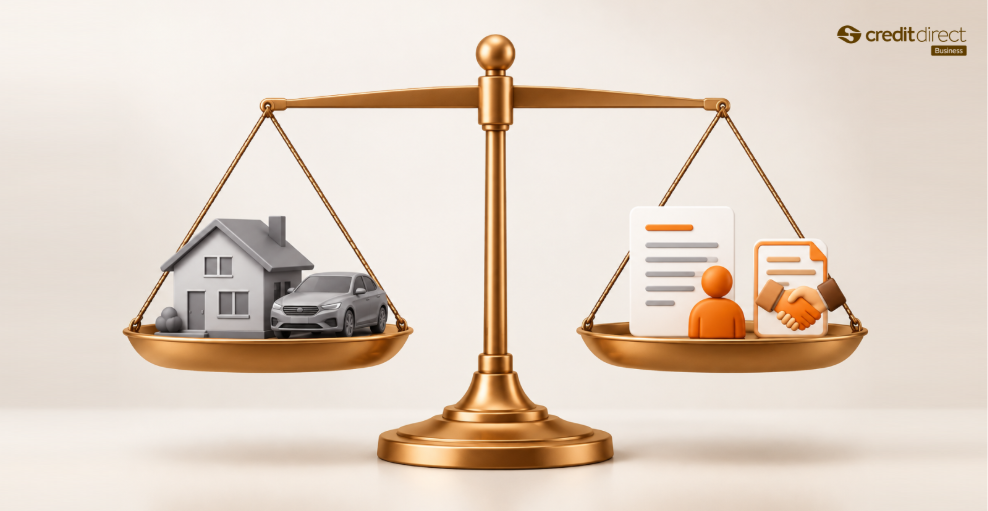
What "No Collateral" Actually Means
Collateral-free does not mean risk-free for the lender, it means the risk is managed differently. Instead of holding a physical asset, a no-collateral lender relies on a combination of the following:
- Your documentation and banking history: a valid CAC certificate, director identification, BVN, and twelve months of bank statements that show a consistent revenue pattern.
- Domiciliation of proceeds: for order or invoice-based financing, your buyer's payment is routed directly toward repayment, so the transaction itself secures the loan.
This is why a first-time applicant with no prior lending history can still be assessed fairly. What matters is what your business documentation and transaction history show, not what you personally own.
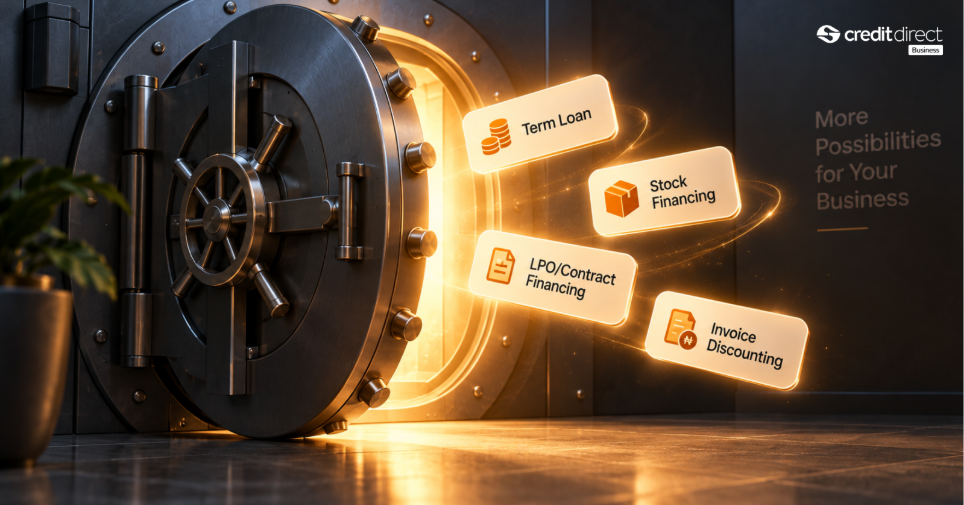
Which Loans Actually Skip Collateral
Credit Direct Business structures all four of its core loan products to work without traditional collateral, each using a different substitute depending on what the loan is funding:
For a closer look at how Nigerian business owners use each of these daily, see 4 Business Loans for Nigerian Business Owners, and for a full side-by-side comparison of every option, our complete guide to business loans in Nigeria walks through all four in detail.

Who Qualifies for Collateral-Free Financing
Eligibility comes down to what your business can show, not what you own. Across all four products, the core requirements are the same:
- A valid CAC certificate
- Director identification and BVN
- Twelve months of business bank statements
- A recent utility bill or proof of address
- A signed direct debit mandate
A few extras apply depending on the loan, like supplier details for stock financing or a signed contract for LPO and contract financing. None of these require you to own property, which is exactly why a growing business without fixed assets can still qualify.
Common Myths About Collateral-Free Financing
- "No collateral means no scrutiny." Not true. Your bank statement history and revenue pattern are reviewed just as closely, only the security mechanism is different.
- "It's only for very small loans." Not with Credit Direct Business. LPO/contract financing and invoice discounting go up to ₦20,000,000 without traditional collateral.
- "A guarantor is the same as collateral." Not quite. A guarantor commits to covering the debt personally if needed, while collateral is a specific asset the lender can seize. Not every collateral-free loan requires a guarantor either.
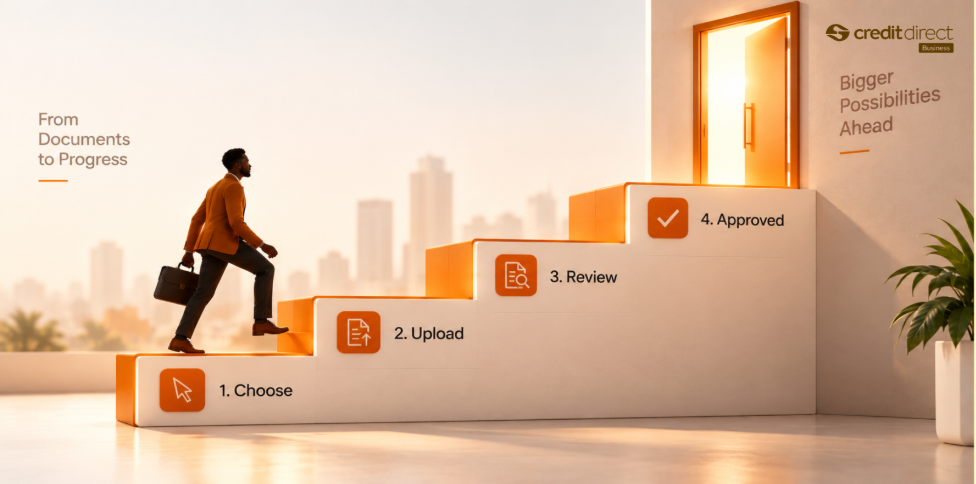
How to Apply
- Choose your loan type based on what you need the money for.
- Upload your documents, CAC certificate, director ID and BVN, and 12 months of bank statements, plus any product-specific evidence.
- Get assessed. Most applications are reviewed within 24 to 48 hours.
- Accept your offer and receive funds directly into your business wallet.
Frequently Asked Questions
Can I really get a business loan in Nigeria without collateral?
Yes. Term loans, stock financing, LPO and contract financing, and invoice discounting are all structured to work without traditional collateral, using documentation, a guarantor, or domiciliation of proceeds instead.
Do I need a guarantor for every collateral-free loan?
No. A prime mover guarantor may be required for some term loans depending on the amount, but order- and invoice-based financing rely on domiciliation of proceeds instead.
Can a new business with no loan history qualify?
Yes. Your CAC registration, bank statement history, and supporting documents are what determine eligibility, so a first-time applicant can be assessed fairly.
What is the maximum I can borrow without collateral?
With Credit Direct Business, term loans and stock financing go up to ₦20,000,000, while LPO and contract financing and invoice discounting go up to ₦50,000,000, all without traditional collateral.
Is collateral-free financing more expensive?
Not inherently. Pricing depends on the loan product and your credit assessment, not on whether collateral is involved.

Your Business Doesn't Need Property to Get Funded
If the lack of fixed assets has kept you from applying for financing before, that barrier no longer applies. What matters now is your business's documentation and how it earns, not what you personally own.
Compare all four collateral-free loan types on the Credit Direct Business Loans page and apply for the one that fits your business today.
.png)


%20compressed.png)