




A common sentiment on social media is that people are one emergency away from financial instability. One chronic illness, a layoff, an accident, or just life happening can really impact our financial goals and wealth journey.
We might not be able to prevent a crisis or guarantee we will have enough money to solve it, but we can plan for these moments.
The easiest way to do that is to create an emergency fund.
Yes, I know it's not a novel idea, but most people conflate their savings with their emergency fund. I'll explain the difference between the two and show you how you can allocate funds properly to both.
What is an Emergency Fund?

It's money for when life happens, not to buy the latest phone or for a trip to Zanzibar. It's the money that protects you when the unexpected happens.
Your savings, on the other hand, are for everything else. For your birthday plans, the iPhone 18 coming out soon, and other expenses you want to make.
Beyond that, an emergency fund allows you to leave your investments untouched during a crisis. Your wealth journey doesn't have to take a backseat during the tough moments. Rather than liquidating investments, your emergency fund bails you out.
If you haven't started investing, then building your emergency fund should be the first step in building wealth.
How Much Should You Have in Your Emergency Fund?
Even a Financial Analyst on our research team, Ademidun Shogo, couldn't give me a specific amount. However, she explained a framework to guide how we should all think of it.
You should have 3 - 6 months of your monthly expenses in your emergency fund. The idea is simple: if you spend ₦150,000 monthly, your emergency fund should be between ₦450,000 and ₦900,000.
Yes, it's an ambitious amount of money, but it's essential and achievable.
Here's how to do it:
- Decide where you're going to keep your emergency funds.
- Start by putting a portion of your income aside every month, ideally 10-20% of your monthly income. The most important thing is to start.
- Build a routine around it. If you get paid on the 25th, then you must add to your emergency funds on the 26th. That's a routine you can build.
The best place to build your Emergency Fund is Yield.
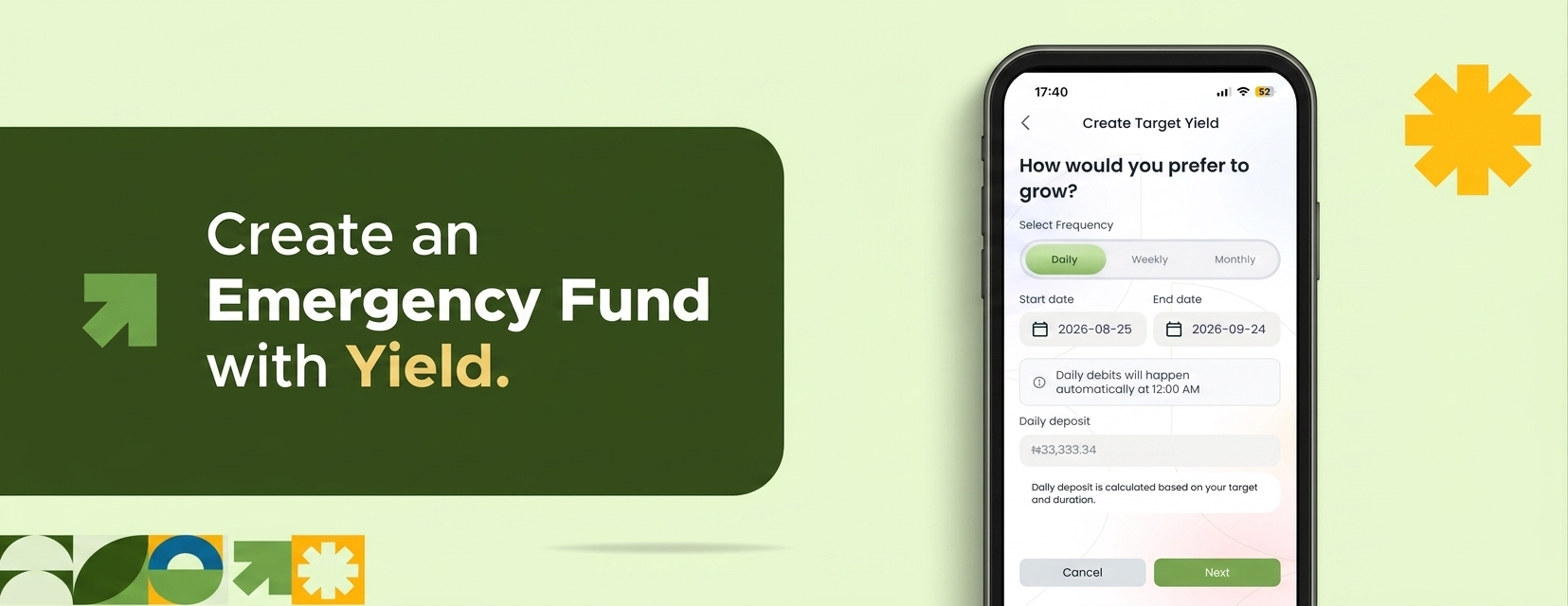
An easy way to start this is by creating a Target Yield plan that takes 10-20% of your monthly income from your Credit Direct wallet until you hit the target amount. This way the funds drop at the frequency you choose, whether daily, weekly, or monthly. Once you hit the target amount, you can then lock your funds up in Fixed Yield.
Make the first step in your wealth journey and create a Target Yield plan.
We've written more about building an Emergency Fund on our blog.
Read more about Emergency Funds
This article is from our newsletter, Money and More with Yield, Ep. 03.
%20compressed.png)