Getting a loan on your phone can take far less time than deciding whether the loan itself is a good deal.
An app may advertise ₦5 million, but that does not mean you will qualify for ₦5 million. A low monthly rate may look attractive until you calculate the total repayment. A 12-month tenor may reduce the amount you pay each month while increasing what you pay overall. And an app that promises quick approval still needs to fit your income, existing obligations and reason for borrowing.
That is why choosing a loan app should start with the loan itself, not how quickly you can download the app.
A good loan should answer five basic questions clearly:
- How much can you actually borrow?
- What will the loan cost in naira?
- When and how will you repay it?
- What happens if your circumstances change?
- Who is providing the credit and how is the lender regulated?
This guide explains how to answer those questions, how digital lenders assess borrowers, what to check before accepting an offer and how to decide whether a loan fits your monthly income.
What is a loan app?
A loan app is a mobile application through which you can apply for, receive and manage credit.
Depending on the provider, the app may allow you to complete identity verification, submit employment or income information, receive a personalised loan offer, accept the terms, set up repayment and monitor the outstanding balance without visiting a physical branch.
Some apps go further.
The Credit Direct Mobile app, for example, combines personal loans with transfers, bill payments, a wallet that currently earns 10% per annum and Yield investment plans offering up to 21% per annum.
But extra features should come after the lending decision.
If you are borrowing money, the first thing to understand is the credit you are accepting.
How do loan apps work in Nigeria?
Most legitimate loan apps follow the same basic process: you create an account, complete identity verification, provide the information required for assessment, request a loan and receive an offer if you qualify.
The details differ between lenders.
On the Credit Direct Mobile app, for example, an applicant for a personal loan must first have done their KYC. The application is then submitted through the Loans section. If approved, the applicant can review the offer, accept it and set up repayment before disbursement.
Behind that relatively simple user journey is a credit assessment.
The lender may consider factors such as:
- your identity and KYC information
- income
- employment
- existing debt
- credit history
- previous repayment behaviour
- information supplied during the application
- the amount requested
- your ability to repay
This is why the amount advertised on a website or app store is a maximum, not a promise.
How much can you actually borrow from a loan app?
The amount you can actually borrow depends on your financial profile and the lender's assessment, not simply the maximum amount advertised.
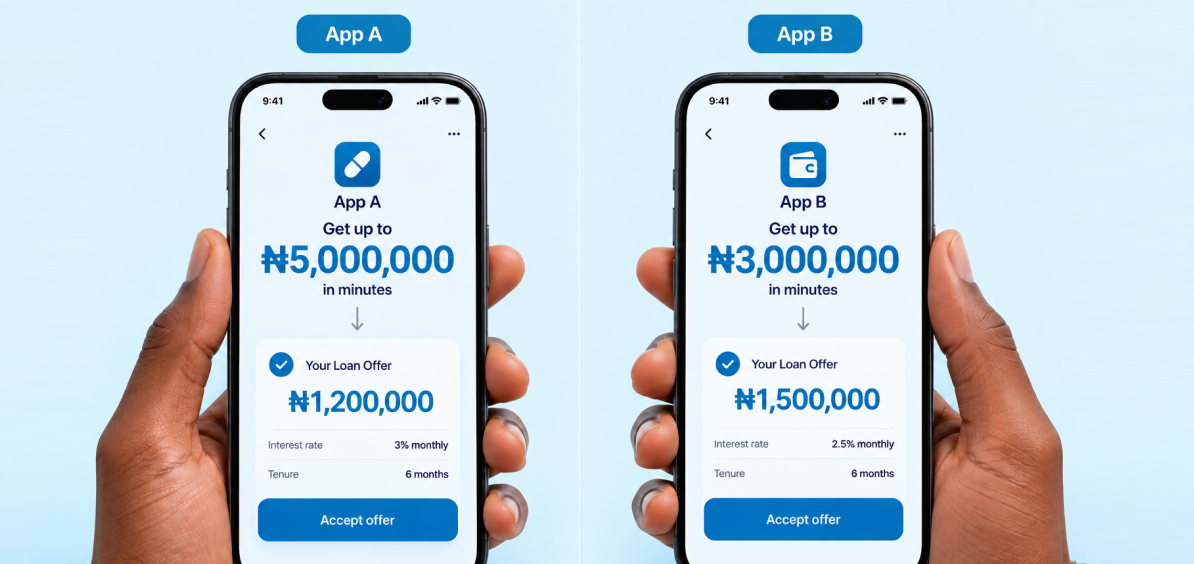
Suppose an app advertises loans of up to ₦5 million.
That means ₦5 million is the product ceiling. It does not mean every applicant who meets the basic requirements will receive ₦5 million.
For our private-sector personal loan, the current maximum available through the Credit Direct Mobile app is ₦5 million. However, the actual amount offered is subject to assessment, including net pay and debt-service ratio.
This distinction matters when comparing loan apps.
Imagine two apps:
If you need ₦1.4 million, App B's lower headline maximum is irrelevant. It has made the more useful offer.
Compare the offer available to you, not merely the biggest number on the provider's website.
Why you might receive less than the advertised maximum?
A lender has to determine whether the requested amount is affordable based on the information available about you.
Income is one obvious factor.
If two people both request ₦3 million but one earns ₦180,000 monthly and the other earns ₦900,000, the same repayment schedule would affect them very differently.
Existing debt matters too.
Someone earning ₦500,000 with no other loan repayments may have more room for another monthly obligation than someone earning ₦700,000 who already pays ₦300,000 every month towards other debts.
Your credit history can also influence the assessment.
For Credit Direct's private-sector personal loan, current published eligibility requirements include a minimum net monthly income of ₦100,000, at least six months of salary history and satisfactory credit history, alongside the required KYC and identification information.
Meeting those basic conditions makes you eligible to apply. It does not automatically guarantee approval or the maximum amount.
Read: How To Increase Your Loan Limit on Loan Apps
What is debt-service ratio and why does it matter?
Your debt-service ratio measures how much of your income is already committed to debt repayments.
A simple way to understand it is:
Monthly debt repayments ÷ monthly income × 100
Suppose your net salary is ₦400,000 and you currently repay ₦80,000 every month.
Your existing debt-service ratio is:
₦80,000 ÷ ₦400,000 × 100 = 20%
Now suppose a new loan would add another ₦100,000 in monthly repayments.
Your total monthly debt commitment would become ₦180,000.
That is:
₦180,000 ÷ ₦400,000 × 100 = 45%
The second calculation tells a very different story from simply saying, “I earn ₦400,000.”
Your salary has not changed. But almost half of it would now be committed to debt before rent, food, transport, family responsibilities and other expenses are considered.
This is one reason a lender may approve less than you requested.
It is also a calculation worth doing yourself.
A lender deciding that you qualify for a loan does not automatically mean the repayment will feel comfortable within your particular household budget.
How do you know whether a loan is affordable?
A loan is affordable when you can meet each repayment without repeatedly borrowing again or sacrificing essential expenses.
Start with your actual take-home income.
Then subtract the expenses that must be paid in an ordinary month.
For example:
A proposed ₦95,000 monthly loan repayment technically fits inside the ₦100,000 remaining.
But it leaves only ₦5,000 of breathing room.
One unexpected expense could immediately create a problem.
A ₦60,000 repayment leaves ₦40,000 available after the planned expenses. That may be much easier to absorb.
This is why affordability is more useful than asking only whether you qualify.
How should you compare loan interest rates?
Do not compare loan offers using a percentage alone.
Before comparing two rates, find out what each percentage represents.
A lender might quote a monthly interest rate. Another might display an annual percentage rate. A third may show the total amount repayable.
Those numbers are not directly interchangeable.
The Central Bank of Nigeria's consumer-protection framework includes APR calculations that incorporate the total cost of a loan, including interest and applicable fees and charges, which is why APR can be more useful for comparing credit than looking at a headline interest rate alone.
For the borrower, however, there is an even simpler number worth checking:
How much will leave my pocket in total?
If you receive ₦500,000 and will ultimately repay ₦620,000, your financing cost is ₦120,000.
That does not answer every pricing question, but it gives you a concrete starting point.
Interest rate, APR and total repayment are not the same thing
These three figures answer different questions.
You should also check whether there are:
- platform fees
- management fees
- insurance charges
- processing charges
- late-payment charges
- third-party charges
- early-settlement conditions
Two loans carrying the same stated interest rate can therefore have different total costs.
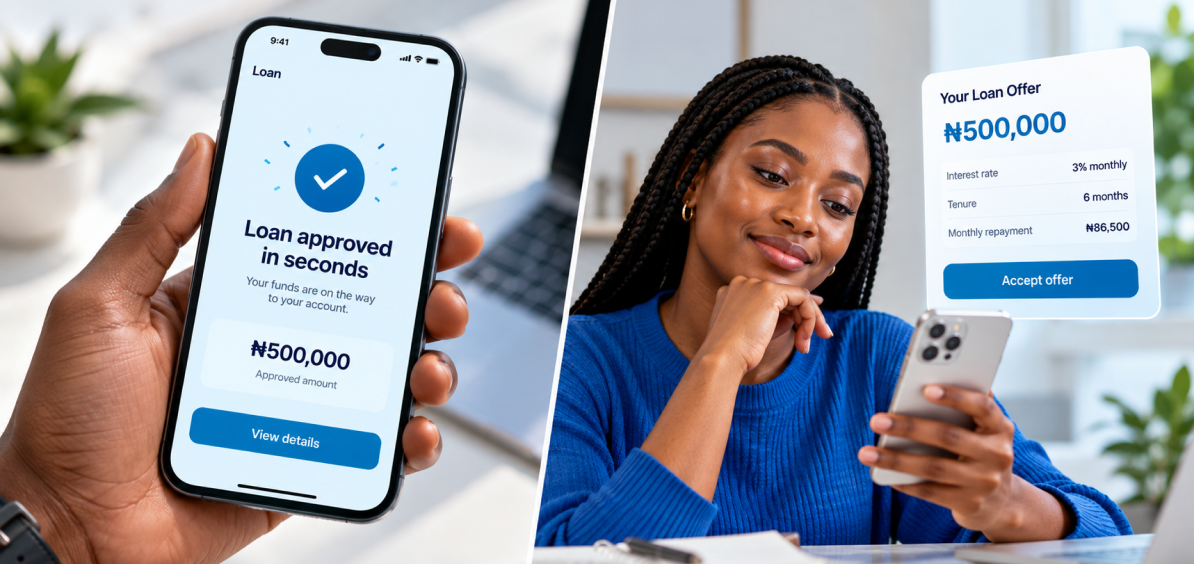
Flat interest versus reducing-balance interest
Another detail borrowers often miss is what amount the interest is being calculated on.
With a flat or full-principal structure, interest can be calculated using the original loan amount even as repayments reduce what you owe.
With reducing-balance interest, the interest calculation is based on the outstanding principal as it falls over time.
Consider a simplified illustration.
Two lenders both quote what appears to be the same rate on a ₦1 million loan. One calculates interest on the original ₦1 million throughout the relevant period. The other calculates interest on the declining balance after repayments.
The headline percentage may look similar while the naira cost differs.
That is why the loan agreement matters.
Do not assume that two offers displaying the same percentage use the same calculation method.
A worked example: comparing two ₦500,000 loan offers
Imagine you receive these hypothetical offers:
Offer B requires less each month.
That could make it easier to manage.
But it costs ₦48,000 more overall.
Which one makes more sense depends on the borrower's cash flow.
Someone who can comfortably absorb ₦100,000 every month might prefer the lower overall cost.
Someone whose budget cannot safely accommodate ₦100,000 may find the lower instalment more realistic, even though the total cost is higher.
There is no useful comparison without considering both monthly affordability and total repayment.
Does a longer repayment period make a loan cheaper?
No. A longer tenor can make the monthly repayment smaller without making the loan cheaper overall.
Suppose a borrower can choose between repaying a loan over six months or 12 months.
The 12-month option may feel easier because the repayment is spread across twice as many months.
But if interest continues to accumulate across the longer period, the total amount paid can be higher.
When choosing a tenor, compare:
Monthly repayment: Can I comfortably pay this amount?
Total repayment: What does choosing this tenor cost me altogether?
The longest available tenor is not automatically the best one.
The shortest is not automatically best either if its instalment would put too much pressure on your monthly finances.
What is a credit report?
A credit report is a record of your borrowing and repayment history collected by a credit bureau.
Lenders use credit information to understand how an applicant has handled previous obligations.
This is one reason repayment behaviour can affect your ability to obtain credit later.
The CBN's Credit Risk Management System also exists to improve lenders' ability to assess borrowers and identify existing credit obligations within the financial system.
Credit Direct requires a satisfactory credit history for its current private-sector personal-loan product.
A previous loan therefore does not disappear from the wider credit picture simply because you delete the lending app.
What can affect your chances of getting approved?
Approval depends on the lender, but several factors commonly matter.
Your income
Regular, verifiable income gives the lender evidence that money is available to support repayment.
Your existing debt
Your income may look strong until existing monthly repayments are included.
Your credit history
Late payments, unresolved defaults and previous repayment behaviour can affect future credit assessments.
Your employment history
For salary-linked products, lenders may want evidence that your income has been consistent over a reasonable period.
Our current private-sector personal-loan criteria require at least six months of salary history.
Your KYC information
Your identity information needs to be complete and accurate.
For Credit Direct Mobile personal loans, you must be at least a Tier 2 KYC customer before applying. Tier 2 requires both BVN and NIN information.
The amount requested
Requesting substantially more than your income can support may reduce the amount offered or contribute to a decline.
Why can someone with a good salary still be declined?
Income is only one part of creditworthiness.
A high-income applicant may already have significant debt. There may be problems with the information submitted. Credit history may show unresolved obligations. Employment or identity information may not be successfully verified.
The lender may also determine that the requested amount would produce an unsuitable repayment burden.
This is why “I earn enough” and “I qualify” are not necessarily the same statement.
At Credit Direct, eligibility and the eventual offer can take account of KYC level, employment type, income, credit information and repayment history.

What documents do you need to apply for a loan?
Requirements differ by provider and product.
For our current private-sector personal loan, published requirements include:
- at least Tier 2 KYC
- a minimum net salary of ₦100,000
- at least six months of salary history
- a bank account with a Nigerian commercial bank
- staff identification
- valid and verifiable identification
- satisfactory credit history
- a repayment instrument such as an active debit card or direct debit
Applicants must also satisfy the relevant age and verification requirements.
The application itself is completed through the Credit Direct Mobile app.
Civil servants can also take a loan on the app by selecting the government parastatal they work with on the app.
How to apply for a personal loan on the Credit Direct app
If you meet the eligibility requirements, you can complete the main application journey from your phone.
Step 1: Sign up or log in
Download Credit Direct Mobile and create your account if you do not already have one.
Step 2: Complete Tier 2 KYC
You need to reach at least Tier 2 before applying for a personal loan.
If your account is still on Tier 1, the app will prompt you to upgrade.
Step 3: Apply from the Loans section
Enter the information requested for the loan application and submit your request.
Make sure your profile and employment information are accurate before submitting. Incorrect or outdated details can interfere with verification.
Step 4: Review your offer
If your application is approved, review the offer available to you.
The maximum personal loan advertised on the app is ₦5 million, but your actual offer depends on your assessment.
Do not accept simply because you have been approved.
Check the approved amount, tenor, repayment schedule, applicable interest and other disclosed costs.
Step 5: Set up repayment
Complete the required repayment authorisation.
Step 6: Accept and receive your loan
Once the required steps are completed, the approved loan is disbursed into your Credit Direct wallet.
From there, you can use the wider app for transfers, payments and other supported transactions.
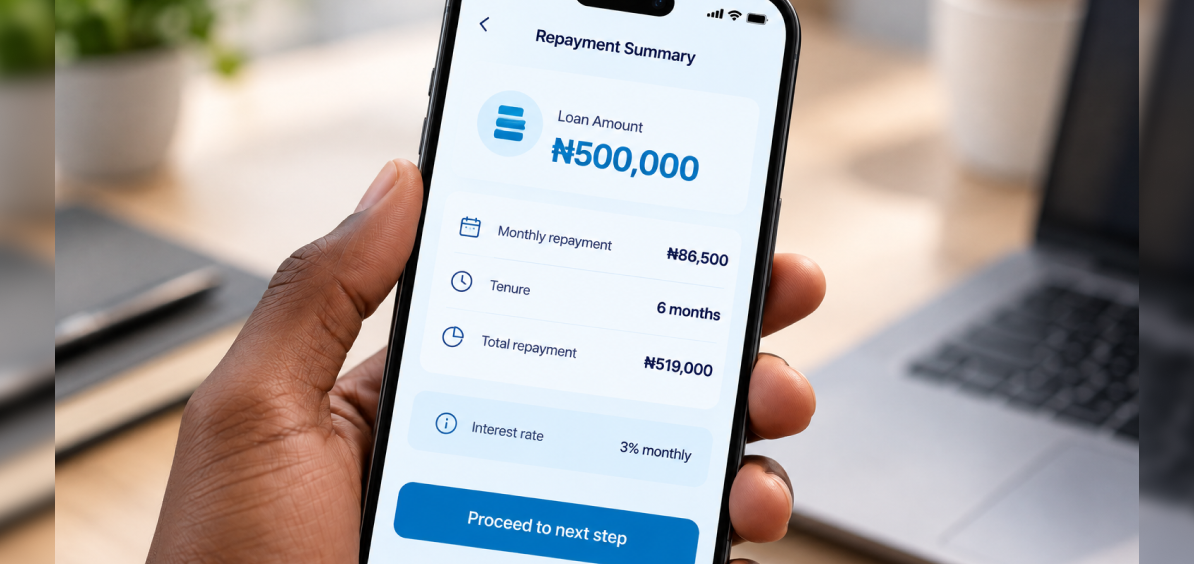
What should you check before accepting any loan offer?
A good rule is to stop at the offer screen and read before tapping “Accept”.
Check these eight things.
1. Amount you will actually receive
Do not confuse the amount requested with the amount approved.
Also check whether any applicable fees affect the net amount available to you.
2. Total repayment
How much will you have paid when the loan is completely settled?
Write the number down if necessary.
3. Monthly repayment
Put the installment into your actual monthly budget.
Would it still work in a month when transport costs rise, an appliance breaks or another unplanned expense appears?
4. Repayment dates
Know exactly when the first payment falls due and how often subsequent payments occur.
5. Interest calculation
Understand the rate and how it is applied.
6. Fees
Look beyond interest.
Check every disclosed fee and charge.
7. Late-payment consequences
Know what happens if a repayment is missed.
8. Early-repayment terms
Do not assume paying early automatically eliminates all future interest or charges. The treatment of early repayment depends on the terms of the particular facility.
Read this section of the agreement before accepting if you think you may settle ahead of schedule.
Should you borrow the maximum amount offered?
Usually, the better question is how much you actually need.
Imagine you need ₦800,000 for a specific expense but receive approval for ₦1.5 million.
The extra ₦700,000 can feel like additional purchasing power. It is also additional debt.
If the full amount attracts financing costs, taking money you do not need increases the amount that has to be repaid.
A useful borrowing rule is:
Start with the expense, calculate the amount required, then determine whether the repayment fits your budget.
Do not reverse the process by starting with the maximum approval and looking for things to spend it on.
When can taking a personal loan make sense?
Personal credit can be useful when it solves a defined financial need and the repayment fits comfortably within expected income.
Examples might include:
- an important expense that cannot reasonably wait
- education or professional costs
- necessary household expenditure
- relocation costs
- a planned purchase that is manageable within your income
- consolidating an appropriate financial obligation where the economics genuinely work
The purpose matters because it helps answer another question:
What will my finances look like after I spend the borrowed money?
Borrowing ₦1 million does not increase your wealth by ₦1 million. It gives you ₦1 million today in exchange for an obligation to repay the principal plus the agreed financing cost.
When should you reconsider taking the loan?
Reconsider the loan if you cannot clearly identify how it will be repaid.
Other warning signs include:
- needing a new loan primarily to repay another loan
- using most of your remaining monthly income for the proposed instalment
- not understanding the total repayment
- accepting because the offer expires soon
- borrowing substantially more than the expense requires
- relying on uncertain future income to meet fixed repayment dates
One particularly useful test is simple:
If my income next month is exactly what it is today, can I still afford this repayment?
If the plan only works if a bonus, side income or expected payment arrives, you are depending on an assumption rather than existing affordability.
Can loan apps recover money from your other bank accounts?
Depending on the loan and repayment arrangements, Nigerian borrowers may encounter mechanisms designed to recover overdue credit across qualifying accounts.
One important example is the Global Standing Instruction, or GSI.
The CBN introduced the GSI framework to support loan recovery and improve repayment culture. Under the framework, participating institutions can recover overdue principal and accrued interest from qualifying funded accounts linked to a defaulting borrower, subject to the applicable rules. Qualifying account types include individual current accounts, domiciliary accounts, deposit or investment accounts and electronic wallets. The CBN subsequently changed recovery attempts under GSI to continuous and unrestricted throughout the life of the outstanding loan until it is fully repaid.
The practical lesson is straightforward.
A missed loan does not necessarily remain isolated inside the app where you originally borrowed.
Read the repayment mandates and recovery provisions attached to your loan before accepting it.
How can you tell whether a loan app is legitimate?
Start by identifying the actual company behind the app and the regulator responsible for it.
Do not judge legitimacy from app design, social-media advertising or download numbers alone.
Check:
- the legal name of the lender
- the relevant licence or regulatory status
- physical and digital contact information
- published terms and conditions
- privacy information
- complaint channels
- whether rates and charges are disclosed before acceptance
Credit Direct Finance Company Limited is licensed and regulated by the Central Bank of Nigeria.
Nigeria also has an FCCPC framework covering digital and non-traditional consumer lending, although its position in 2026 requires some context.
What changed in Nigeria's digital-lending regulation in 2026?
Nigeria's digital-lending regulatory landscape changed significantly between 2025 and 2026.
The FCCPC's Digital, Electronic, Online and Non-Traditional Consumer Lending Regulations 2025 came into effect on 21 July 2025. They were introduced to establish standards around fairness, transparency, accountability and consumer protection in digital lending. The Commission subsequently set 5 January 2026 as its deadline for full compliance and began phased enforcement later that month.
However, the position changed again.
Following a Federal High Court order issued in April 2026 in litigation challenging the regulations, the FCCPC announced on 22 May 2026 that it was suspending implementation and enforcement while challenging the order. The Commission reiterated in June that enforcement remained suspended pending the court process.
That means borrowers should be careful with simplistic advice such as “just check whether a lender is FCCPC approved”.
Regulatory status depends partly on what type of institution is providing the credit. A finance company such as Credit Direct, for example, operates under a CBN licence. Other digital lenders may fall within different regulatory structures.
The useful consumer question is:
Who is the legal lender behind this app, and which regulator supervises that institution?
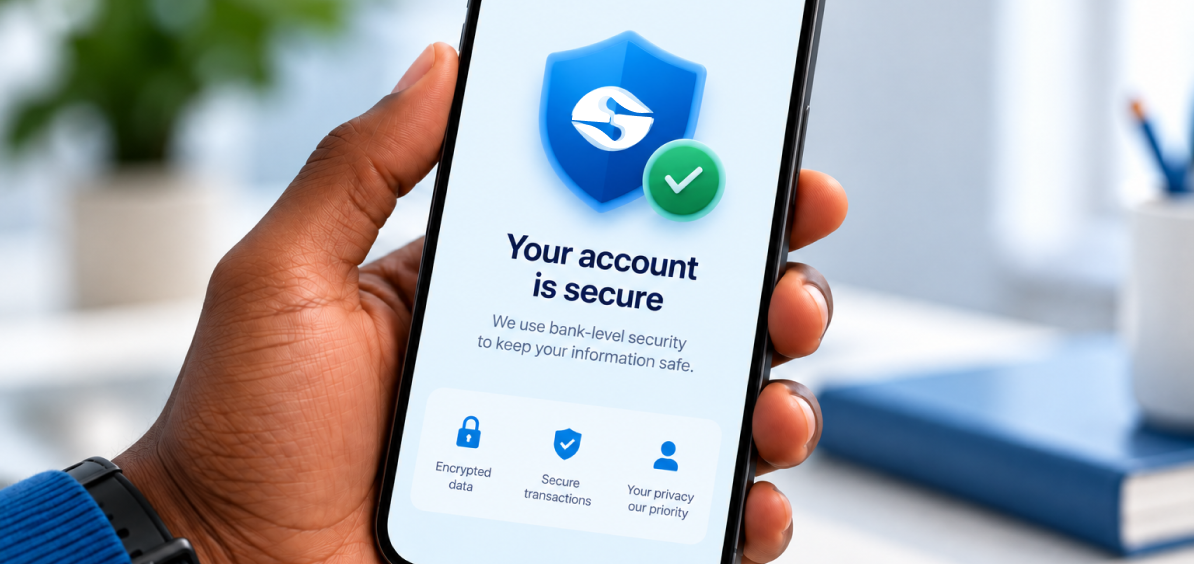
What permissions should a loan app have on your phone?
A lender needs information to identify you, assess an application and service a loan.
That does not mean every piece of information on your phone should automatically be available to it.
Digital lending has previously raised serious privacy concerns in Nigeria. The Nigeria Data Protection Commission has specifically highlighted intrusive access to information such as contacts, pictures and messages as a problem associated with some online lending practices.
Before installing or using a financial app, review:
- the permissions requested
- the privacy notice
- why particular information is being collected
- how your information will be used
- the company responsible for processing it
- available complaint and support channels
A request for information should make sense in relation to the service being provided.
What happens if you miss a repayment?
The exact consequences depend on your loan agreement.
Possible effects can include applicable charges, collection activity, attempts through authorised repayment mechanisms and negative information being reflected in your credit history.
The longer-term effect is easy to underestimate.
Missing a payment is not only a problem for today's loan. Poor repayment history can make future borrowing more difficult because other lenders may use credit information when assessing subsequent applications.
If you know before the due date that you may have difficulty making a repayment, contact the lender through its official support channels rather than ignoring the obligation.
Can you repay a loan early?
Some loans allow early settlement, but you should check exactly how early repayment affects the amount due.
Do not automatically assume that settling several months early means all interest associated with those months disappears.
Products can calculate and treat interest differently.
The relevant question is:
What is my settlement amount today?
If you are considering early repayment, request or check the current settlement figure and review the terms governing the facility.
How should salary earners choose a loan?
Salary earners should build the decision around their net income, not gross salary.
Net salary is the money that actually reaches you after deductions.
From that figure, account for:
- essential monthly expenses
- existing debt
- irregular but predictable expenses
- the proposed loan repayment
- a reasonable margin for unexpected costs
For our current private-sector personal loan, applicants need a minimum net monthly salary of ₦100,000 and at least six months of salary history, among other eligibility requirements. Loans can reach ₦5 million with repayment periods of up to 12 months, subject to assessment.
The ₦100,000 threshold is an eligibility requirement. It should not be interpreted to mean every person earning ₦100,000 can comfortably support a new loan.
Affordability still depends on the rest of the person's finances.
How should you compare two personalised loan offers?
Once you have real offers, forget the advertising for a moment.
Put the offers side by side.
Now test each offer against your monthly budget.
This produces a far better comparison than asking which provider advertises the lowest rate or largest maximum.
What else should a financial app do after you borrow?
A loan may be what brings you into an app, but borrowing does not have to be the only reason the app remains useful.
Credit Direct Mobile is designed as a broader financial app.
Your Credit Direct wallet currently earns 10% per annum on the balance, with interest accruing daily and paid monthly. You can also make transfers and payments through the app.
For funds intended for longer-term growth, Yield provides several investment structures.
Current options include:
- Flex Yield: 15% per annum with up to four withdrawals per month under the published terms
- Fixed Yield: 16% to 21% per annum depending on the selected tenor
- Target Yield: 15% per annum for goal-based contributions
- Gift a Yield: a Fixed Yield plan created for someone else
Fixed Yield currently starts from ₦50,000, with the highest published rate of 21% per annum applying to the 12-month term. Returns are subject to applicable withholding tax.
These additional features should not influence you into accepting a loan that does not suit you.
Think of them in the opposite order.
First decide whether the credit itself is appropriate. Then decide whether the rest of the app is useful for how you manage your money.

A 10-point checklist before you tap “Accept”
Before accepting a personal loan, answer all ten questions:
- How much am I actually receiving?
- What is the total amount I will repay?
- How much is each installment?
- Can my normal income support that installment after essential expenses?
- What rate, fees and other charges apply?
- When is the first repayment due?
- How will repayments be collected?
- What happens if I pay late?
- What happens if I repay early?
- Who is lending me the money and who regulates them?
If you cannot answer one of these questions from the offer and loan agreement, find the answer before accepting.
A five-minute review can matter much more than a five-minute application.
Frequently asked questions
Q: What should I look for when choosing a loan app in Nigeria?
A: Compare the amount actually offered, total repayment, monthly instalment, tenor, interest calculation, fees, late-payment terms, early-settlement rules and the lender's regulatory status. Do not choose based only on the advertised maximum or speed of approval.
Q: How do I know if a loan app is legitimate in Nigeria?
A: Identify the legal company behind the app and verify the regulatory framework under which it operates. Also check for clear terms and conditions, privacy information, official support channels and transparent loan disclosures. Credit Direct Finance Company Limited, for example, is licensed by the Central Bank of Nigeria.
Q: What is the best loan app for salary earners in Nigeria?
A: The right app depends on the offer available to you and whether its repayment fits your income. Salary earners should compare net income requirements, maximum loan amounts, repayment periods, total cost and how the lender assesses affordability rather than choosing from a headline maximum alone.
Q: How much can I borrow on the Credit Direct app?
A: Eligible customers can access personal loans of up to ₦5 million through Credit Direct Mobile, subject to assessment. The amount you are actually offered depends on factors including net pay and debt-service ratio.
Q: What salary do I need for a Credit Direct personal loan?
A: Our current private-sector personal-loan criteria require a minimum net monthly salary of ₦100,000 and at least six months of salary history, alongside the other eligibility and KYC requirements.
Q: Do I need collateral to get a Credit Direct personal loan?
A: No. Our current app-based private-sector personal loan does not require collateral or a guarantor. Approval is still subject to eligibility, verification and credit assessment.
Q: How long can I repay a Credit Direct personal loan?
A: Our current private-sector personal loan offers repayment periods of up to 12 months, subject to the offer available to you.
Q: Does being eligible mean I will receive ₦5 million?
A: No. ₦5 million is the maximum published amount. Your actual offer is determined through assessment and can be lower.
Q: Can a longer loan tenor reduce my monthly repayment?
A: Yes, spreading repayment across more months can reduce the amount due each month. However, a longer tenor does not necessarily reduce the total cost of the loan. Compare both the instalment and total repayment.
Q: Does Credit Direct check my credit history?
A: Yes. Satisfactory credit history is part of the current eligibility criteria, and credit information forms part of our assessment process.
Q: Can I apply completely online?
A: Yes. The current Credit Direct Mobile journey is designed to handle application, eligibility assessment, offer review, acceptance, repayment authorisation and disbursement confirmation through the app.
The best loan is the one you understand before accepting
Digital lending has made access to personal credit faster.
It has not changed the basic economics of borrowing.
Every loan gives you access to money today in exchange for a future repayment obligation. The quality of that decision depends on whether the amount solves a real need, whether the cost is clear and whether your income can support the repayment without creating another financial problem.
So do not start with: Which app will give me the most money?
Start with: How much do I actually need?
Then ask:
- What will it cost me?
- What will I pay each month?
- Can my existing income comfortably support it?
- Do I understand what I am agreeing to?
If those answers make sense, you are in a much better position to decide whether the loan makes sense too.
For eligible salary earners - private workers or civil servants, you can apply for a personal loan of up to ₦5 million through the Credit Direct Mobile app, review your personalised offer and repayment terms before accepting, and manage the loan from the same app.