One core piece of advice for wealth building is to spend less than you earn, or in other words, be financially disciplined. Like everything that needs doing, it’s easier said than done.
Most people try to be prudent with their finances, but life has a way of breaking down the best plans. We end up spending lots of money on emergencies and genuine needs. In other cases, we genuinely want to own things that experts may consider beyond our current financial reach.
In summary, most people have limited resources but many needs. This makes financial discipline difficult; however, not impossible.
In this article, with the help of Ademidun Shogo, a Financial Analyst on our Research team, we will explore;
- What is financial discipline?
- Why you need to be financially disciplined
- Key strategies for building financial discipline
- One key tool for financial discipline

What is Financial Discipline?
Financial discipline is the ability to manage money by saving regularly, budgeting, investing and living within one’s means. It’s working within a set of rules to achieve your financial goals.
It’s you choosing to live within whatever money boundaries you’ve set and making a conscious effort to take key actions to build and manage wealth.
For some people, this skill is built early, learned from their parents, picked up in formal financial literacy classes, or developed through personal study using books and resources online. For others, it comes later, often after a difficult financial season teaches the lesson the hard way.
Wherever you are starting from, the good news is that financial discipline is a skill, not a personality trait. It can be learned, practised, and strengthened like any other.

Why You Need Financial Discipline
Financial discipline is important because it allows us to hit our financial goals faster. It provides us with the skills needed to make, manage, grow and pass wealth on.
Here is what it makes possible.
Achieve financial security. Financial discipline is what turns a good income into lasting security. It is the difference between earning well and actually being secure. When you consistently spend less than you earn and put the difference to work, you build a cushion that protects you from life's shocks, and a foundation you can build real wealth on; you become financially independent.
Live a fulfilled life. This might sound backwards, since discipline can feel like restriction. But the opposite is true. When your finances are under control, you get to enjoy your money without guilt or anxiety. You can take the trip, make the purchase, or help a loved one, because you planned for it, not because you gave in to impulse. Discipline is what makes genuine enjoyment sustainable.
Reduce financial stress. Money worry is one of the heaviest kinds of stress there is. It affects your sleep, your relationships, and your health. Financial discipline directly reduces that weight. When you know your bills are covered, your investments are growing, and your plan is working, the constant background anxiety about money begins to fade.
Prepare for emergencies. Life is unpredictable. A medical bill, a job loss, or an urgent repair can arrive without warning. A financially disciplined person is not thrown into crisis when these things happen, because they have built a buffer to absorb them. Discipline turns an emergency from a disaster into an inconvenience.
Build wealth that outlives you. Financial discipline is not just about your own comfort. Consistent, disciplined money habits are how people build wealth substantial enough to change their family's trajectory, putting children through school, supporting parents, and leaving something behind. It is how one disciplined generation lifts the next.
6 Ways to Build Financial Discipline
Knowing why financial discipline matters is one thing. Building it is another. Here are the practical habits that make the difference.
1. Set financial goals. Discipline without direction rarely lasts. When you have a clear goal, a specific amount, for a specific purpose, by a specific date, every money decision becomes easier because you can measure it against something real. "Should I spend this?" becomes "Does this move me closer to my goal or further from it?" Start by naming what you are actually working toward.
2. Budget your income. A budget is simply a plan for your money before you spend it. One widely used framework is the 50/30/20 rule: 50% of your income for needs, 30% for wants, and 20% for savings and investments. A budget removes the guesswork and shows you exactly where your money is going, which is the first step to controlling it.

3. Track your expenses. Most people have no idea where their money actually goes. Small, frequent spending adds up quietly until a large chunk of income has vanished with nothing to show for it. Tracking every expense, even for a single month, is often a wake-up call. You cannot manage what you do not measure.
4. Automate your investments. This is one of the most powerful habits because it removes willpower from the equation. When your savings and investing happen automatically, before you get a chance to spend the money, discipline becomes the default rather than a daily battle. Set up automatic contributions to an investment plan, and your wealth grows whether or not you remember to do it.
Learn more about automated investments.
5. Live below your means. As your income grows, resist the urge to grow your spending at the same pace. The trap that keeps many high earners financially stressed is lifestyle inflation: spending more simply because you earn more. The disciplined move is to let the gap between what you earn and what you spend widen over time, and to put that growing gap to work.
6. Pay yourself first. Do not wait until the end of the month to save or invest whatever is left, because there is usually nothing left. Instead, treat your savings and investments as the first bill you pay each month, before anything else. This single mindset shift, saving first, spending second, is at the heart of nearly every disciplined financial life.
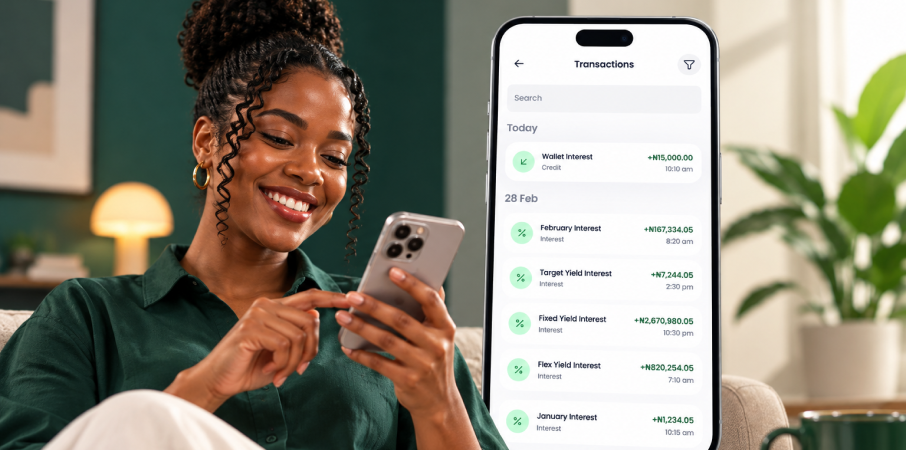
Notice how many of these habits point in the same direction: putting your money to work automatically and consistently, rather than relying on willpower alone. That is exactly where the right tool makes all the difference
How Yield Helps You Build Wealth
Financial discipline is far easier when you have a tool that does the hard part for you. With Yield by Credit Direct, you can begin your investment journey and earn up to 21% per annum. Yield offers four unique investment plans, each tailored to a different wealth-building need.
Flex Yield earns you 15% per annum while keeping your money accessible. You can make withdrawals when you need to, which makes it ideal for the money you want growing without locking it completely away. It is a disciplined place to keep funds that would otherwise sit idle and tempting in an account.
Fixed Yield offers up to 21% per annum when you lock your money for a set period. Because you cannot easily dip into it, it enforces discipline by design, protecting your money from impulse spending while it earns the highest return Yield offers. This is the plan for money you know you will not need in the short term.
Target Yield is built for goal-driven investment. You choose a goal, set a timeline, and automate your contributions daily, weekly, or monthly, earning 15% per annum along the way. It combines three disciplined habits at once: setting goals, automating contributions, and living within your means. This is the product we recommend for everyone still learning to build financial discipline.

Gift a Yield lets you invest in someone else's future by creating a plan in their name that grows at up to 21% per annum. It extends your financial discipline beyond yourself, a way to build something lasting for the people you care about.
Whichever plan fits your needs, the principle is the same: Yield takes the habits that build wealth, investing, automating, and living within your means, and makes them easy to stick to.
Financial discipline in 2026 does not have to be a constant battle of willpower. With clear goals, the right habits, and a tool that does the heavy lifting, it becomes something you build once and benefit from for life.