




June 2026 Inflation Report
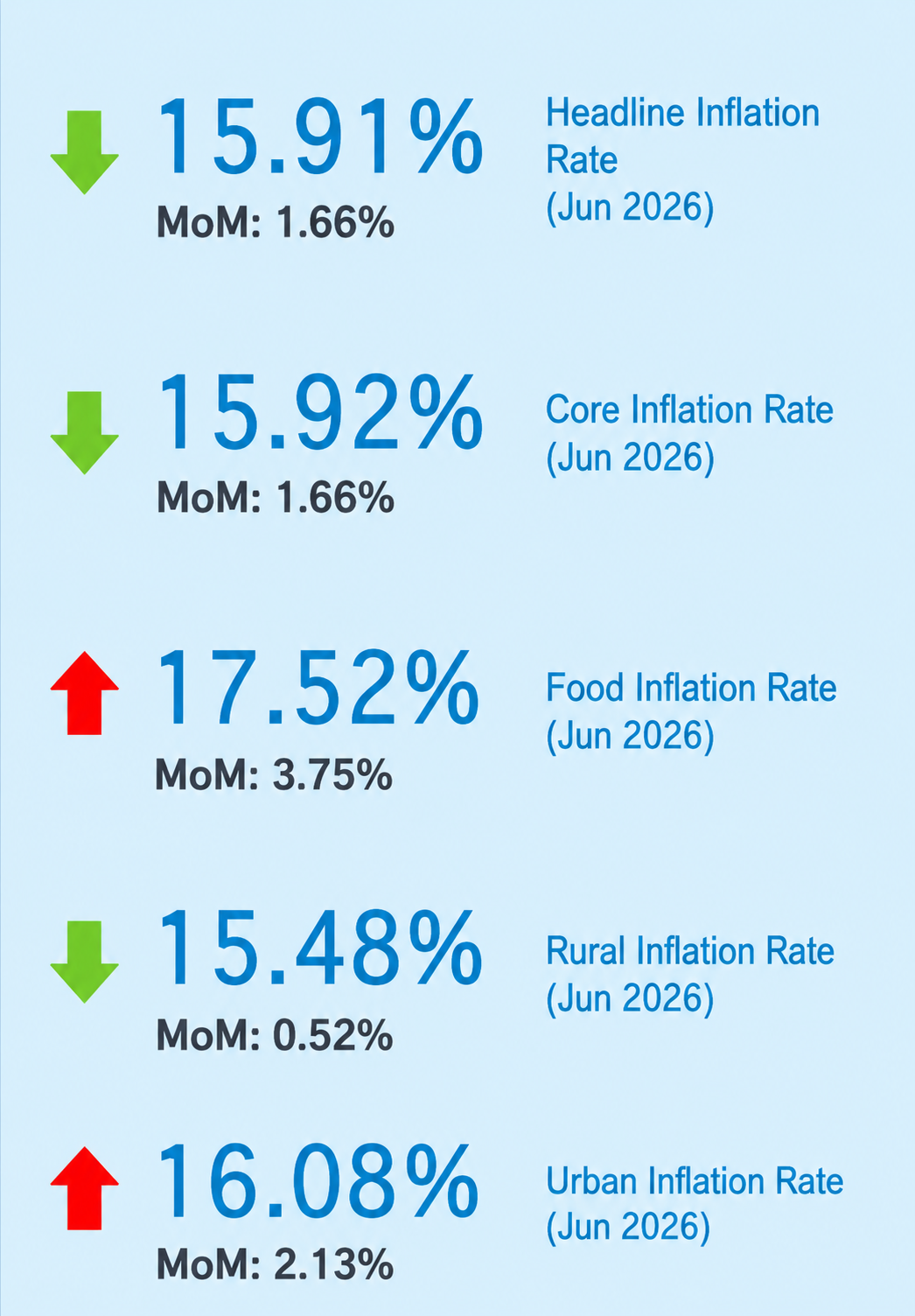
Headline inflation eased marginally to 15.91% YoY in June from 15.93% in May, while MoM inflation slowed to 1.66% from 1.75%, as softer non-food pressures partly offset stronger food inflation. Food inflation accelerated to 17.52% YoY, while the MoM rate rose sharply to 3.75% from 2.98% in May, reflecting seasonal supply pressures and higher prices of key staples including tomatoes, fresh pepper, beef, garri and cassava flour. While Core inflation moderated to 15.92% YoY from 16.82%, while MoM inflation eased to 1.66% from 1.94%. Lower energy-related costs likely contributed to the moderation, with Dangote Refinery cutting its PMS gantry price by ₦50 to ₦1,125/litre in late June as global crude prices eased.
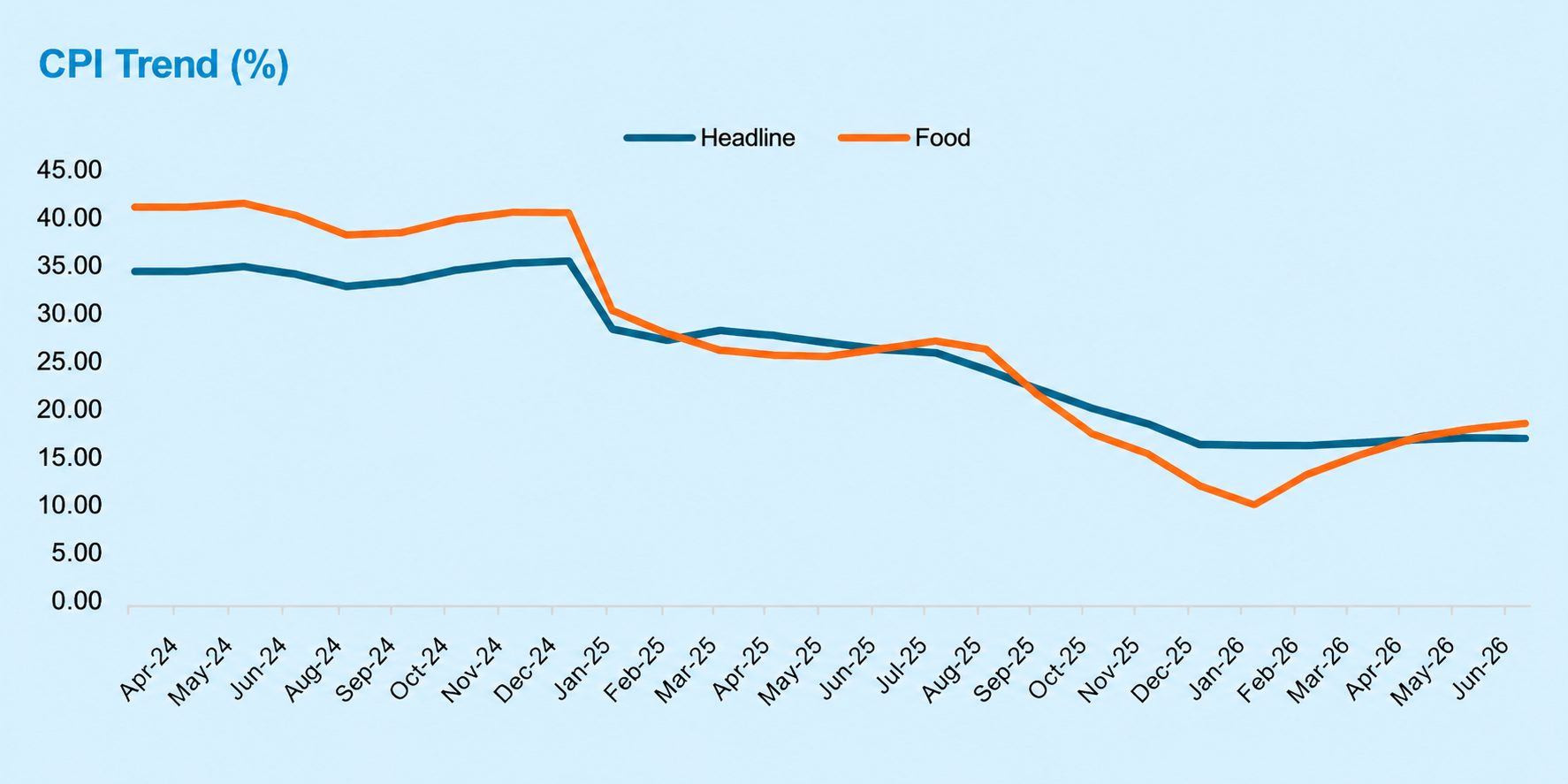
Inflationary pressures remain concentrated on the supply side, particularly for food, as insecurity, flooding and farmer displacement continue to disrupt agricultural production and distribution. Meanwhile, relative Naira stability has helped limit imported inflation. The July outlook is less favorable, with planting-season pressures, flooding and persistent food-supply constraints likely to keep food inflation elevated. Energy prices also present renewed upside risk following Dangote Refinery’s shift to dollar-denominated pricing from 13 July.
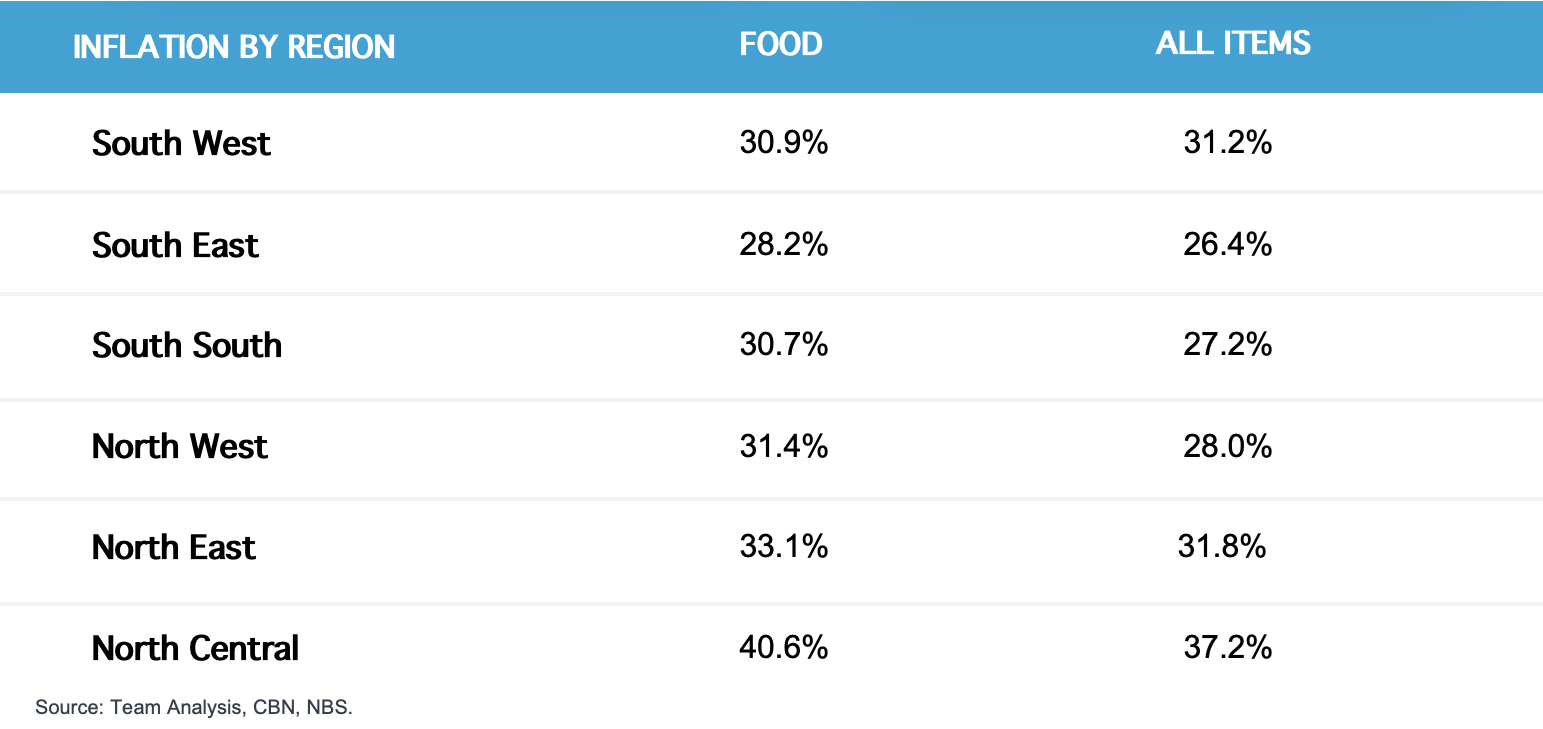
State Focus: Supply Shocks Lift North Central Inflation Above National Average
Niger, Kogi and Abuja posted the highest all-items YoY readings (42.23%, 41.59% and 39.91%), reflecting acute supply disruption from banditry and farmer displacement across the North Central food belt. On a month-on-month basis, Niger (11.65%), Katsina (8.13%) and Kwara (7.52%) posted the sharpest increases, while Bayelsa (-6.48%), Benue (-5.58%) and Cross River (-5.12%) saw prices ease outright.
Kogi (53.02%), Niger (43.83%) and Benue (40.83%) recorded the highest food inflation YoY, while Katsina (16.82%), Kebbi (9.79%) and Niger (8.96%) posted the sharpest month-on-month food increases, pointing to a lean-season supply squeeze in the North.
Persistent insecurity across the North Central and North West disrupted market access and constrained food distribution, pushing Katsina’s month-on-month food inflation to 16.82%, the highest nationwide, as the low base effect from the previous year gradually dissipated.
In contrast, states in the South East and South South recorded relatively moderate inflation rates, indicating that June's inflationary pressures were concentrated in insecurity-affected corridors rather than reflecting a nationwide trend.
June Inflation Signals
The temporary ceasefire between the United States and Iran brought some respite to Nigeria's inflation in June, easing global crude oil prices and triggering successive reductions in domestic petrol (PMS) prices. As energy-related cost pressures softened, headline inflation edged lower to 15.91% YoY in June 2026 from 15.93% in May, marking the first moderation in annual inflation since February. Monthly inflation also eased to 1.66% from 1.75%, while the Consumer Price Index (CPI) rose by 2.3 points to 143.0.
Food inflation, however, remained the dominant source of price pressures, accelerating to 17.52% YoY and 3.75% MoM, the fastest monthly increase since March. Seasonal supply shortages associated with the planting season, compounded by flooding in parts of the country, disrupted agricultural production and food distribution, pushing up the prices of staples such as tomatoes, fresh pepper, beef, garri, and cassava flour. As a result, the Food and Non-Alcoholic Beverages division contributed 6.37 percentage points to headline inflation, more than three times the contribution of any other component.
Underlying inflationary pressures nevertheless continued to ease. Core inflation slowed to 15.92% YoY from 16.82% in May, while the monthly rate declined to 1.66%, supported by lower PMS prices and the Naira's relative stability, which helped contain transport costs and imported inflation.
State-level data revealed widening regional disparities. Niger State recorded the highest all-items inflation at 42.23% YoY and 11.65% MoM, while Kogi (53.02%) and Benue (40.83%) posted the highest food inflation, reflecting the impact of persistent insecurity and farmer displacement across the North Central food belt. In contrast, Imo (19.47%), Ebonyi (20.79%) and Katsina (21.87%) recorded the lowest annual food inflation rates, although Katsina's 16.82% month-on-month food inflation—the highest nationwide—suggests fading base effects and renewed supply pressures. Overall, the relatively moderate inflation recorded across the South East and South South indicates that June's inflation remained concentrated in insecurity-affected food-producing corridors rather than being broad-based across the country.
Headline inflation is expected to resume its upward trajectory in July as renewed food and energy pressures outweigh June's temporary disinflationary gains. Food inflation is likely to remain elevated as the planting season continues to constrain market supplies, while flood risk alerts across 27 states threaten agricultural production and food distribution. Meanwhile, the renewed tension between the U.S and Iran has pushed global crude oil prices higher, increasing the likelihood of renewed upward adjustments in domestic PMS prices and transport costs. Against this backdrop, we expect the MPC to maintain the MPR at 26.5% at its 306th meeting, balancing rising inflation risks against the need to preserve macroeconomic stability and sustain the broader disinflation process.
July 2026 Outlook
Headwinds: The outlook faces lean-season food supply constraints amid persistent banditry and farmer displacement in the North Central belt, while a flash flood alert across 27 states threatens food supplies. In addition, pre-election fiscal spending risks are expected to build as the 2027 election cycle approaches, potentially adding to demand-side pressure.
Tailwinds: Further PMS price cuts and a broadly stable Naira (₦1,415/US$1) would ease imported and logistics costs, while the MPC is widely expected to hold the MPR at 26.5% at its 306th meeting (20–21 July), anchoring policy stability. At the same time, Nigeria's crude output is continuing to run above its OPEC quota, supporting FX earnings.