




.png)
The Naira regained its appreciation momentum in June, with average NFEM and BDC rates strengthening by 22bps and 9bps MoM to ₦1,366.99/$ and ₦1,391.81/$, respectively, as manageable FX demand, targeted policy support and stronger external buffers supported market stability.
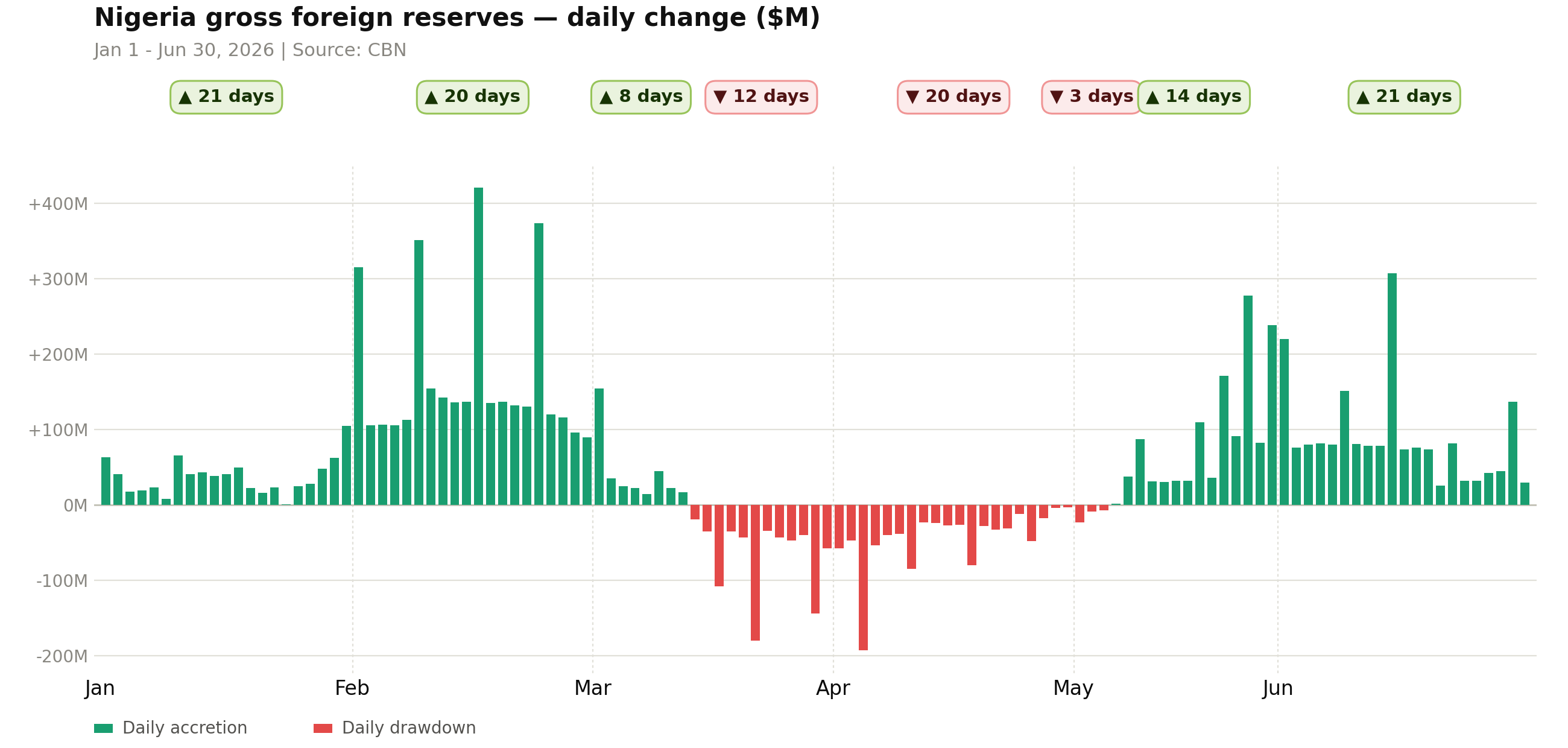
External reserves rose 3.73% MoM to $51.43bn, supported by sustained FX inflows and possibly delayed benefits from stronger oil prices in May. The increase strengthened the CBN’s ability to support the FX market, even as Bonny Light fell to $88/bbl from $113/bbl in May.
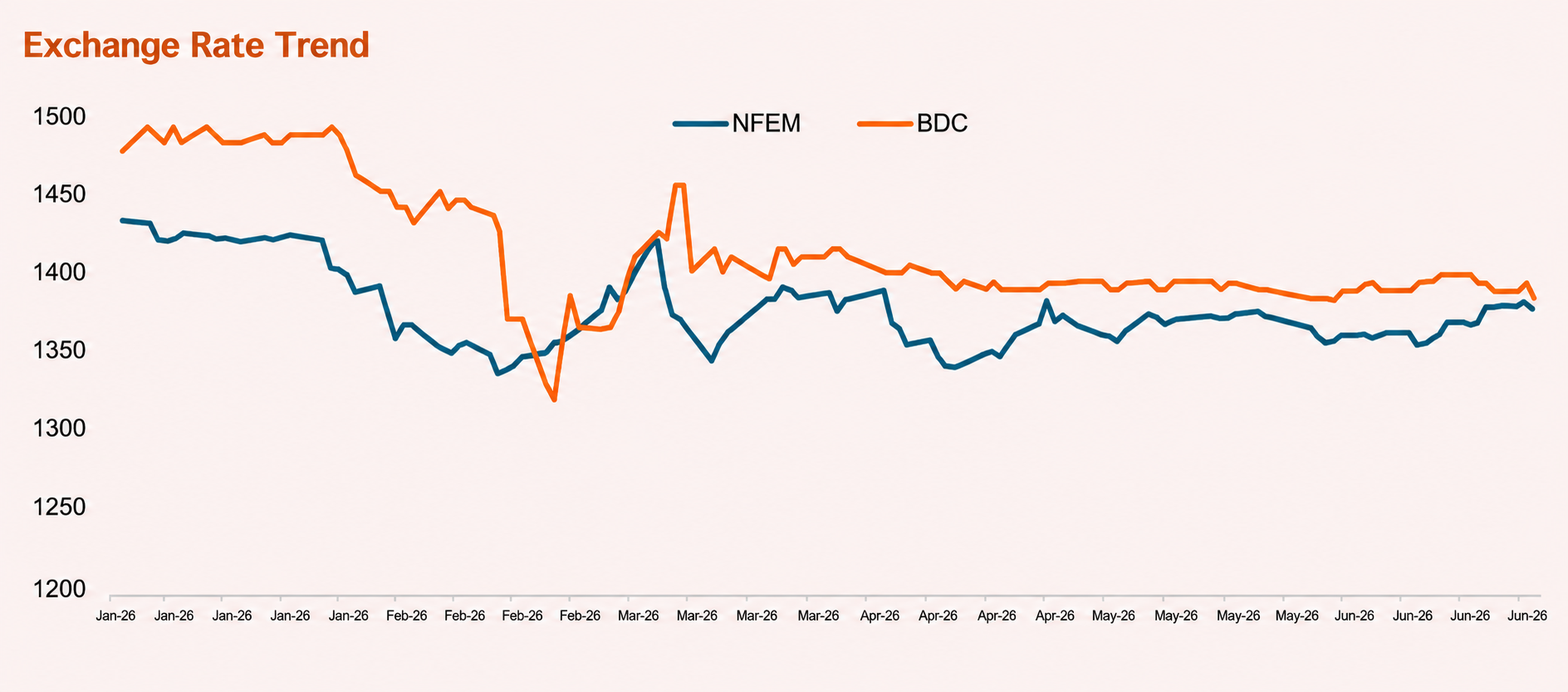
Total FX market supply declined 26% MoM to $2.8bn, pointing to lower market turnover rather than necessarily a broad-based FX shortage. Despite the decline, the Naira appreciated, suggesting that underlying FX demand remained relatively contained and that available supply was sufficient to support market clearing.
Net foreign portfolio outflows rose 416% to ₦43.37bn amid the NGX selloff, increasing potential repatriation-related FX demand. However, CBN interventions estimated at $270m appear to have been sufficient to address residual market needs without materially constraining reserve accretion, allowing the Naira to strengthen modestly during the month.
Expectation for July 2026: Fundamental vs Sentiments

FX Supply
- Crude Oil: Bonny Light crude prices began to decline in June, reaching US$88.24/bbl, the lowest recorded in 2026, as US-Iran tensions eased. However, the total output in June hit 1.56mbpd, the highest recorded this year.
- Capital Importation: Capital importation rose 83.83% YoY to $10.37bn in Q1, boosting FX inflows. However, with portfolio investment accounting for 95.09% of total inflows, the improvement remains largely dependent on volatile FPI. We expect inflows to remain strong in Q2, supported by attractive yields on money market instruments and bonds, which account for about 98% of FPI.
- Trade Balance: Nigeria’s trade surplus reached a record ₦7.55trn in Q1 2026, reflecting a stronger external position and providing support for FX liquidity. We expect the surplus to remain strong in Q2, supported by crude oil exports, which continue to account for a significant share of Nigeria’s export earnings.
- Remittances: CBN reports formal remittances now exceed $600m/month, up from $200m pre-reform. Diaspora inflows have been consistently stable and provide a structural non-oil FX buffer, partially cushioning against oil price volatility.
FX Demand
- Import Dependency: Q1 2026 imports fell 18.17% YoY to ₦13.62trn, driven by lower petroleum-product imports and softer FX-dependent demand. We expect this trend to persist in Q2 as domestic refining continues to reduce import needs.
- FPI Repatriation Risk: Foreign portfolio pressures intensified in June, with net foreign outflows on the NGX rising 416% MoM to ₦43.37bn from ₦8.41bn in May. Sustained portfolio exits could increase repatriation-related FX demand and place additional pressure on market liquidity.
- Speculative Dollar Demand: The official-parallel market spread widened marginally to 1.82% in June from 1.66% in May, equivalent to an increase from N22.71/$ to N24.82/$. Despite the slight widening, the spread remained relatively narrow, reflecting sustained pricing convergence between the official and parallel markets and limiting arbitrage and speculative dollar hoarding incentives.
Other Channels
- Inflation (Energy Prices): Headline inflation eased to 15.91% Y-o-Y in June (15.93% in May), its first drop in 3 months, per NBS, even as food inflation quickened M-o-M.
- CBN Monetary Policy Rate: The CBN held the MPR at 26.50% for a second straight meeting, citing moderating inflation amid Middle East uncertainty. This preserves real yields, helping retain FPI flows and limit capital outflows.
- Foreign Reserves & CBN Intervention: External reserves rose 3.73% to $51.43bn in June, reversing the Apr–May decline. Despite intervening by an estimated $270m to support FX liquidity, the CBN still recorded reserve accretion, reflecting sustained underlying FX inflows and stronger external buffers.
Net Assessment
Supportive - Capital Importation, Trade Balance, Remittances, Import Dependency, Speculative Dollar Demand, Inflation (Energy Prices), CBN Monetary Policy Rate, and Foreign Reserves & CBN Intervention
Mixed - Crude Oil
Pressuring - FPI Repatriation Risk
With eight positive fundamentals outweighing one negative indicator (FPI repatriation risk), and crude oil remaining neutral, the Naira is expected to remain broadly stable to modestly firmer in July. Support should come from easing inflation, the MPR hold at 26.50%, stronger reserves, robust capital inflows, a sizeable trade surplus, lower import dependence and improved remittance flows. However, rising foreign portfolio outflows remain the key downside risk to FX stability.
July 2026 Inflation Outlook
Headwinds: Sustained foreign portfolio exits could increase repatriation-related FX demand, particularly if global risk sentiment weakens. At the same time, increased defence and pre-election spending could widen fiscal deficits and deepen reliance on external borrowing.
Tailwinds: Lower PMS pump prices could ease inflationary pressures by reducing transport and logistics costs, while continued timely intervention by the CBN could help support stability in the foreign exchange market.
What’s Next for July 2026?
In July, we expect the Naira to remain broadly stable and appreciate modestly, supported by elevated external reserves, sustained CBN interventions, and stronger FX inflows as renewed US-Iran tensions keep crude oil prices elevated. Nevertheless, the inflationary pass-through from higher energy prices could temper these gains by increasing domestic price pressures.
In July, we expect Naira to maintain an average trading band of N1,360–N1,400/$ at the official window (NFEM) and N1,385–N1,410/$ at the BDC. Ongoing CBN interventions and expected FX inflows should anchor market stability.