




August 2026 Inflation Report
Headline inflation eased marginally to 15.39% YoY from 15.43% in July, while MoM inflation decelerated to 0.71% from 1.57%, indicating a moderation in the pace of price accumulation. The easing occurred despite renewed energy and external cost pressures, as Bonny Light averaged $94.64/bbl in August, up from $84.81/bbl in July, while Dangote Refinery raised its petrol gantry price to ₦1,265/litre on August 29. The moderation therefore appears to reflect a combination of improved domestic supply conditions and softer food prices and rather than a broad based reversal in all inflationary drivers.
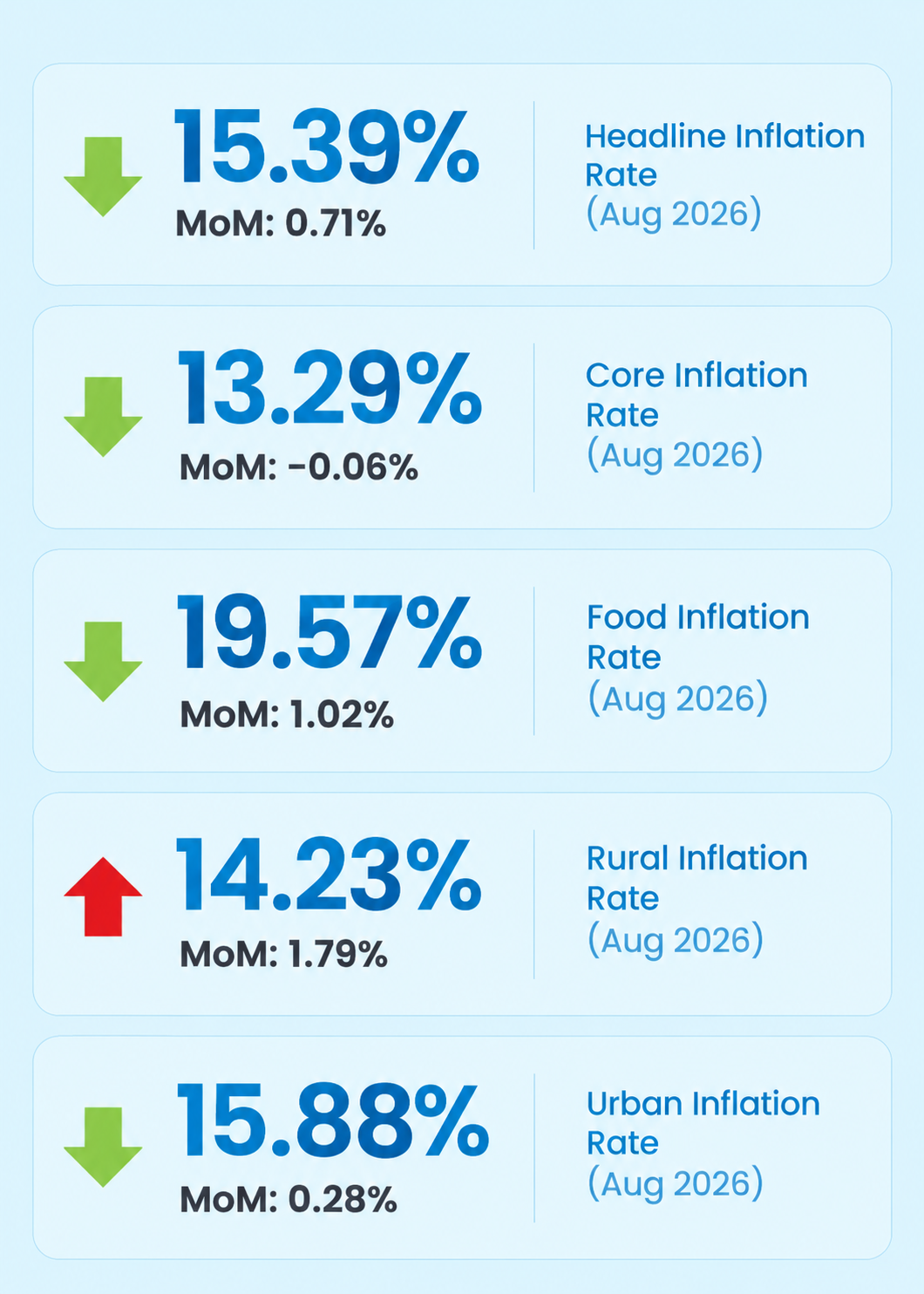
Food inflation remained the key source of disinflation, easing to 19.57% YoY from 20.31%, while MoM food inflation slowed sharply to 1.02% from 5.56% in July. The moderation likely reflects improved agricultural supply as the main harvest season gathers pace, with softer prices across vegetables, tubers, proteins and other staples. Meanwhile, core inflation fell to 13.29% YoY from 14.97%, with MoM core inflation turning negative at -0.06%, suggesting that the easing extended beyond food and was supported by softer goods and services price pressures.

The disinflationary trend could, however, face renewed pressure in September as higher fuel prices feed into transportation, logistics and production costs. Dangote’s gantry price has since risen to ₦1,350/litre, while retail petrol prices have reached as high as ₦1,500/litre in some markets, following renewed increases in crude oil prices. This creates a risk of energy pass through and imported inflation, particularly for core inflation, while food inflation could remain contained if improved harvest supplies persists.
State Focus: Lagos Records the Highest All-Item Inflation, Overtaking Northern States
Inflation remained highly uneven, with Lagos (23.68%), Zamfara (22.56%) and Enugu (22.06%) recording the highest headline YoY rates, versus 2.11% in Sokoto, highlighting significant price divergence beneath the national 15.39% rate.
Food pressures were strongest in the South West (23.1%) and South South (21.0%), consistent with uneven agricultural conditions, including dry spells across parts of the South West, alongside persistent transport and distribution costs.
Northern inflation remained mixed despite widespread insecurity. Zamfara's 37.96% food inflation coincided with conflict-related supply disruptions, but lower inflation elsewhere suggests harvest timing and local market conditions also shaped outcomes.
Lagos' 23.68% headline inflation significantly exceeded the South West's 14.2%, suggesting pressures beyond the regional food cycle, likely reflecting greater exposure to housing, transport, services and purchased food.

August Inflation Signals
Headline inflation eased marginally to 15.39% YoY in August from 15.43% in July, while MoM inflation decelerated sharply to 0.71% from 1.57%, indicating a clear moderation in current price pressures. The limited movement in the annual rate partly reflects base effects, which can delay the translation of softer monthly price movements into the YoY reading. Food inflation provided the largest source of disinflation, easing to 19.57% YoY, while MoM inflation slowed to 1.02% from 5.56% in July. Softer prices across vegetables, tubers, proteins and other staples suggest that improving seasonal supply helped reverse part of July’s food price spike. As the main harvest broadens into Q4, food inflation could remain a key source of near term disinflation, although insecurity, uneven rainfall and distribution constraints may limit the transmission of improved farm supply to consumer prices. Food and non-alcoholic beverages nevertheless remained the largest contributor to headline inflation at 6.16 percentage points.
Core inflation recorded the strongest moderation, falling to 13.29% YoY from 14.97%, while MoM core inflation turned negative at -0.06% from 0.15%. Services and goods inflation also slowed to 0.12% and 0.45%, respectively, from 0.49% and 1.70%. Energy prices declined for a second consecutive month by 0.36% MoM, although the August reading may not fully capture emerging fuel price pressures. Dangote Refinery increased its petrol price from ₦1,165 to ₦1,265 in August, with further increases into September likely to strengthen energy pass through to transportation and other non-food prices.
The Naira appreciated modestly through August, with the NFEM rate strengthening from around ₦1,347/US$ in the third week to ₦1,337/US$ by month end, supported by an improvement in external reserves to $52.66bn as of August 19. The firmer exchange rate should provide some relief to imported inflation and partially offset rising global energy costs.
Headline inflation faces strong upside risks in September, as recent increases in petrol prices are likely to transmit more fully into transportation, logistics and production costs. With ex depot prices now around ₦1,350–₦1,450/litre and retail pump prices hovering around ₦1,500/litre, the highest level recorded so far, energy pass through could reverse part of the recent disinflation, particularly in core inflation. While the ongoing harvest should continue to ease food price pressures, the extent of the offset may be insufficient to fully absorb the broader cost pressures.
Against this backdrop, we expect the MPC to cut the MPR at its September 21–22 meeting, as broadening disinflation and improved FX stability create room for measured easing, despite the emerging fuel price shock and its potential to slow disinflation into Q4.
September 2026 Outlook
Headwinds: Higher crude oil prices and Dangote’s Dollar pricing are pushing petrol prices higher, with gantry prices rising 15.9% to ₦1,350, thereby increasing energy pass-through and transportation costs.
Meanwhile, increased fiscal spending ahead of the 2027 elections could strengthen demand and add to inflationary pressures. At the same time, persistent insecurity continues to disrupt planting, agricultural production and market access across key food-producing states.
Tailwinds: Elevated oil prices could strengthen government revenues, external reserves and FX liquidity, thereby further supporting the Naira and easing imported inflation.
The harvest season improves food availability into Q4, which could sustain the recent moderation in food inflation.