




March 2026 Inflation Report
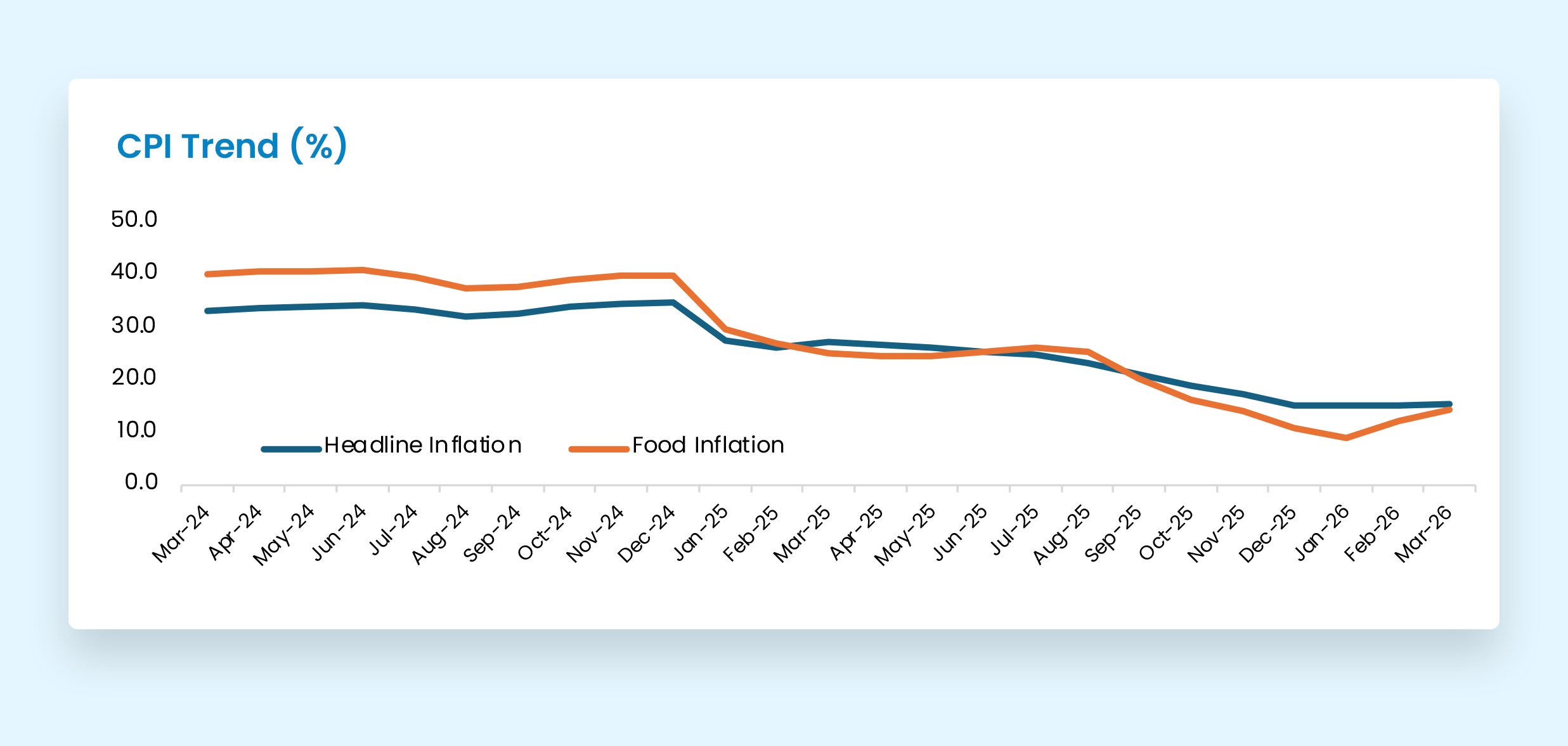
As predicted, Nigeria’s inflation reversed its 11-month disinflation trend in March 2026, with headline inflation rising by 32bps to 15.38%, driven by renewed global energy shocks following the escalation in geopolitical tensions that pushed Brent crude above $100/bbl, alongside a simultaneous depreciation of the Naira that intensified imported inflation pressures.
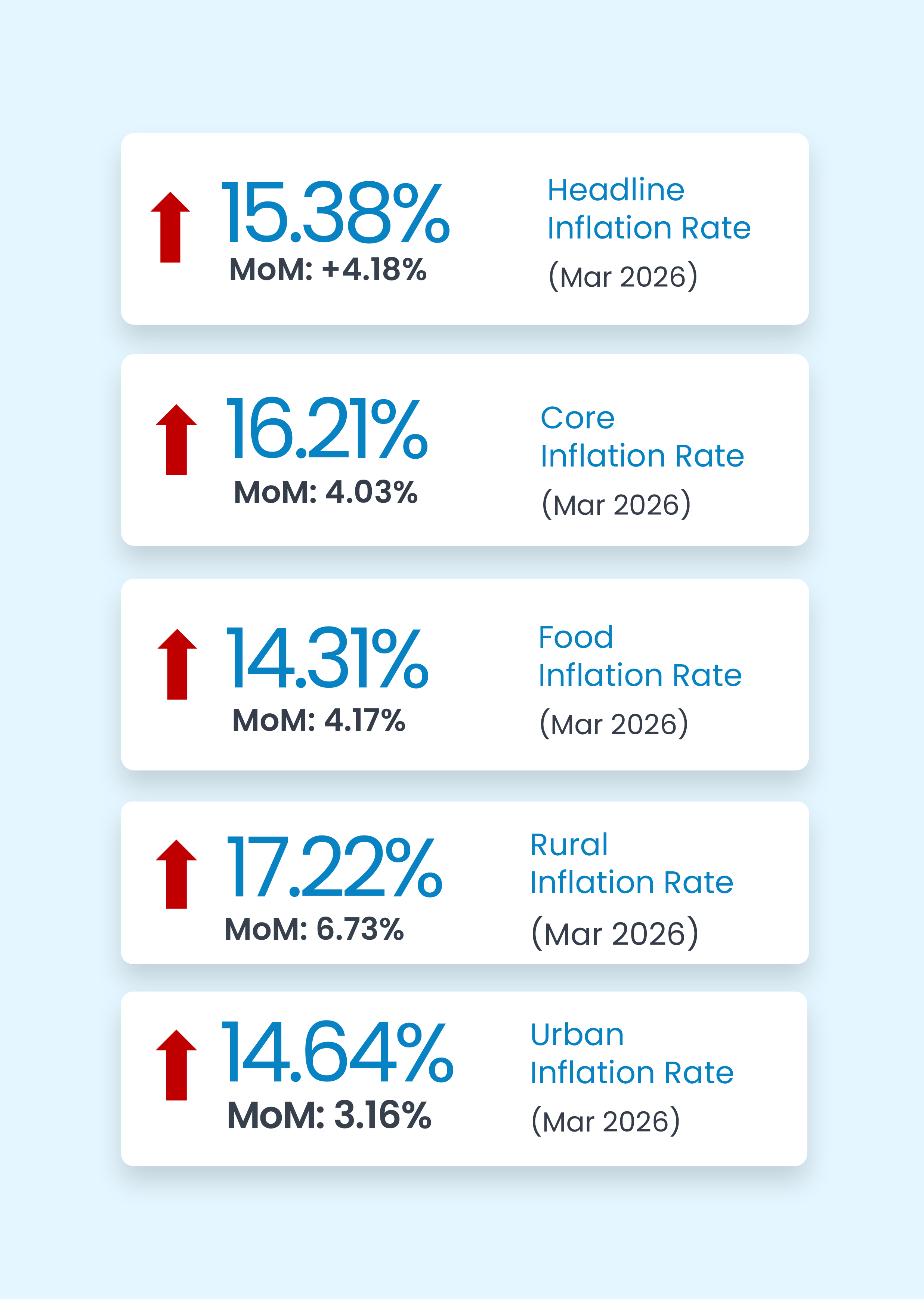
Month-on-month headline and food inflation accelerated sharply to 4.18% and 4.17% (vs. 2.01% in February), reflecting broad-based price pressures from rising logistics costs and imported inflation, amplified by a 55% increase in Dangote refinery’s ex-depot PMS price to N1,200 in March (from N774 in February), which significantly raised transportation and distribution costs across the economy.
Insecurity attacks intensified across key food-producing states, rising to 176 conflict-related incidents in March from 136 in February, according to Eons Intelligence. Combined with persistent oil shocks from the unresolved U.S.–Iran conflict, food prices are likely to remain on an upward trend alongside headline inflation in the near term.
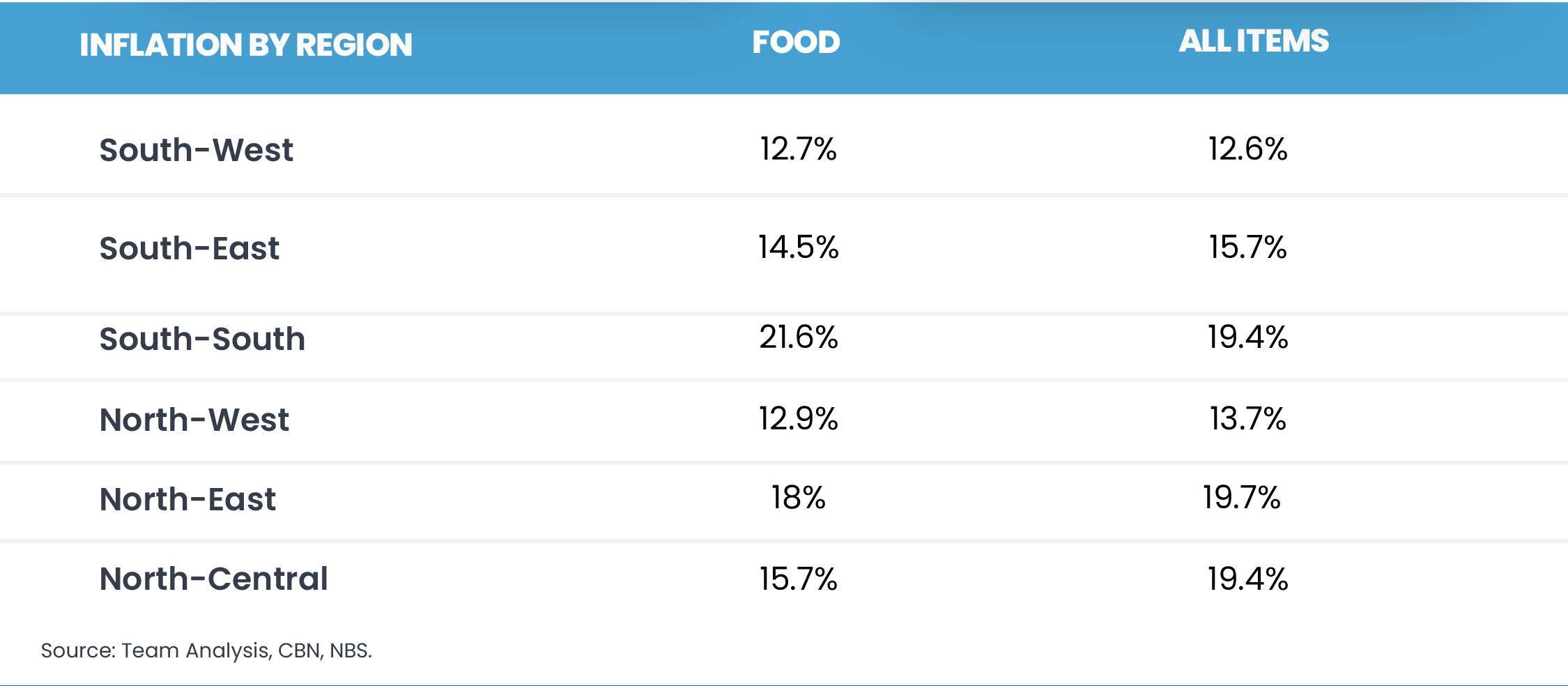
State Focus: South-South Region Food Inflation Rose Above 20%
Bayelsa recorded the highest year-on-year All-items inflation rate at 27.37%, followed by Sokoto (26.03%) and Bauchi (23.67%), reflecting persistent supply-side and structural pressures. Conversely, Osun (5.25%), Kano (9.85%), and Kaduna (10.38%) recorded the slowest rise in headline inflation, indicating relatively more stable price conditions.
On MoM basis, Zamfara (10.77%), Bauchi (9.37%), and Sokoto (9.05%) recorded the highest increases, while Lagos (1.54%), Akwa Ibom (1.80%), and Rivers (1.89%) saw the slowest price growth.
For food inflation, Bayelsa (33.35%), Sokoto (28.02%), and Adamawa (21.67%) recorded the highest year-on-year increases, while Kano (4.29%), Oyo (4.86%), and Katsina (7.48%) recorded the slowest rise, leveraging their nearness to farmlands.
North-West and South-West had the slowest inflation growth, staying below 15% for both Food and All-item Inflation, while South-South had the highest growth for both Food and All-Item Inflation.
What This Means For The Average Nigerian
March inflation figures suggest that Nigeria may be entering a new phase of inflation dynamics, potentially prompting a monetary tightening stance to contain exposure to global risk. We expect inflation to remain elevated in April as energy cost pressures from global shocks persist. However, the Federal Government’s recent reduction in import duties on key commodities, including rice and vehicles, effective from July 1, 2026, introduces a potential disinflationary channel over the medium to long term by lowering the landing cost of imported goods.
Download the Full March 2026 Inflation Report
For detailed state-by-state breakdowns, technical analysis, and our April Outlook commentary, download the complete report.