




As 2025 drew to a close, Nigeria's foreign exchange market told two different stories. For those watching the official window (NFEM), the year ended on a high note. After a slight slip in November, the Naira rebounded in December to close at N1,435.75/$. This recovery was largely fueled by "Detty December", the seasonal influx of foreign currency from the diaspora and festive spending that naturally boosts Naira demand.
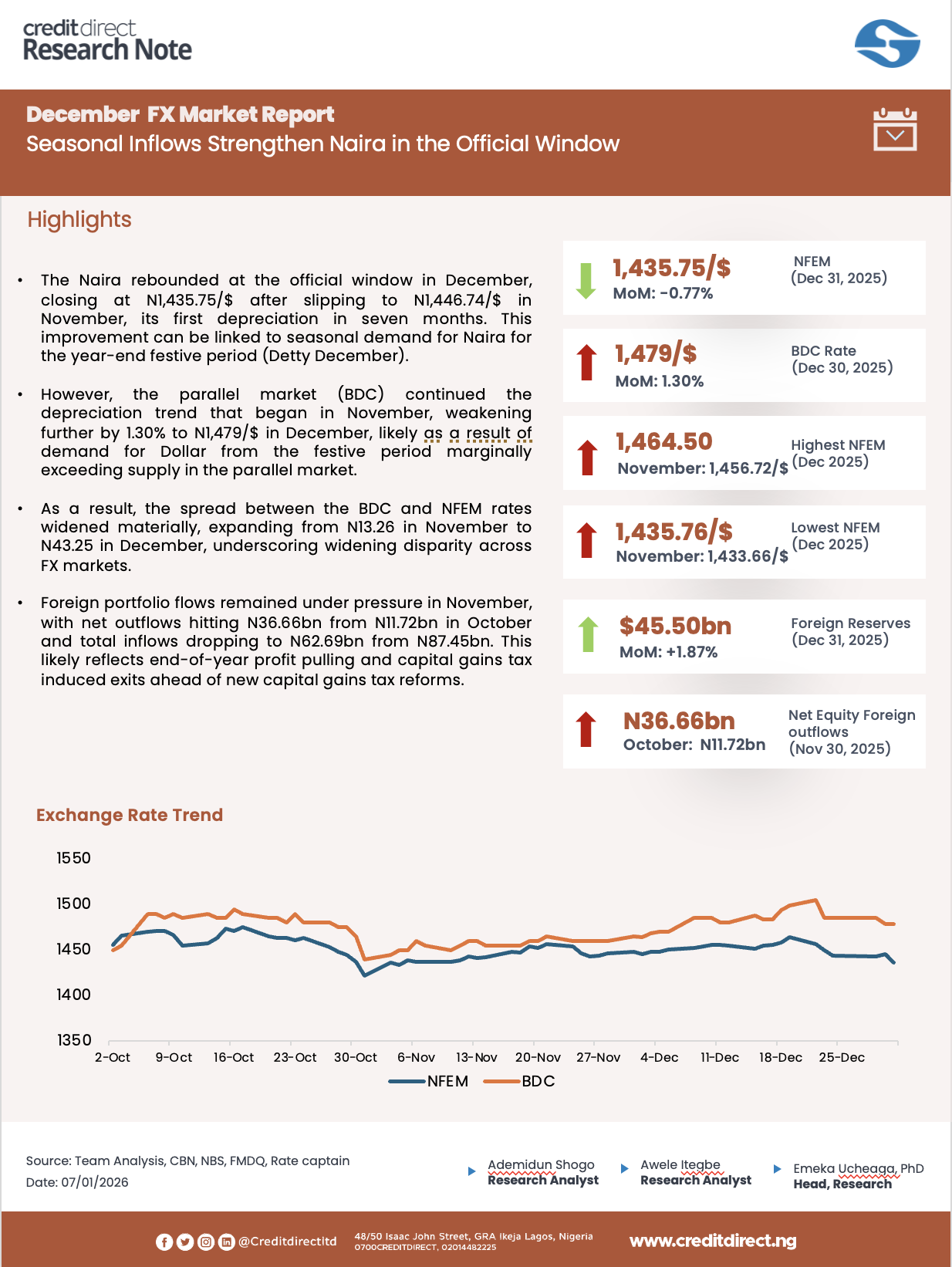
However, the parallel market (BDC) didn't share the same holiday cheer. While the official rate strengthened, the BDC rate continued to weaken, sliding by 1.30% to N1,479/$. This divergence caused the "spread", the gap between the two rates, to balloon from just N13.26 in November to over N43.25 by year-end.
Why Does This Matter?
Beyond the daily rates, the report highlights a significant shift in investor sentiment. Despite the Naira’s stability at the official window, foreign portfolio investors pulled back, with net outflows hitting N36.66bn. This caution is likely due to looming capital gains tax reforms and global uncertainties. On a brighter note, Nigeria’s foreign reserves reached a healthy $45.5bn, providing the Central Bank with the "firepower" needed to maintain stability through interventions.
What’s Next for 2026?
As we enter January, the "festive fever" will likely cool off. Analysts expect the Naira to maintain a steady trading band between N1,435 and N1,445/$ at the official window. While headwinds like volatile oil prices and election-related spending remain, the steady accretion of foreign reserves and ongoing CBN actions offer a sense of cautious optimism for the months ahead.