300,000 +

Nigerian Borrowers

One Story About Credit

DOWNLOAD REPORT

Enter your details to download the full report

Oops! Something went wrong while submitting the form.
download report

Nigeria
Consumer
Credit Insight

2025

2

0

2

5

AN EXCERPT FROM NIGERIA'S CREDIT LANDSCAPE REPORT
300,000 +
Nigerian borrowers?
This report looks at how Credit Direct customers accessed and used credit in 2025. It explores who borrowed, how much they borrowed, repayment patterns, and the growing role of Buy Now, Pay Later in everyday spending.
What the numbers say

₦449k

Average loan size

+72%

Loan growth YoY

₦110 trn

Total credit: Dec 2025
Scroll to explore
GENDER

& ACCESS
Women accounted for 1 in every 4 loans we disbursed; yet women borrow more per loan and repay better than men
Loan disbursement split

Who is borrowing?

Our data revealed that men accounted for 74% of all loan disbursements, while women accounted for just 26%. This shows a persistent gender gap and significant untapped potential among female borrowers.

Despite representing only 26% of total borrowers, women repaid their loans better, indicating that their larger loan amounts do not mean greater credit risk.

₦478k

Women avg loan — higher than men despite fewer disbursements

₦431k

Men avg loan — 74% of all disbursements

74%

men
₦430,962 average loan
10.9% delinquency rate

26%

Women
₦478,117 average loan
7.8% delinquency rate

Women Accounted For 1 in Every 4 Loans We Disbursed

Why Nigerians borrow

Every Naira borrowed
has a reason

The top three reasons for borrowing show Nigerians using credit to survive, not to build wealth.
Rent and Housing
Medical Bills
School Fees

Nigerians collect an average of  ₦449K  per loan

Top 3 borrowing reasons: Rent, medical Bills & School fees

Family borrowing rates

Married vs Single Borrowers

Married people make up 91.9% of all the loans we disbursed. Credit is a necessity as they are typically responsible for a larger family.
The communal nature of Nigerian households means married adults serve as financial anchors for an extended family network. Credit becomes necessary in these circumstances, particularly for housing, health, and education.
Higher default risk

15%

Single borrowers more likely to default
Married borrowers

91.9%

of all loans disbursed
Single borrowers

8.1%

of all loans disbursed

Family Borrowing Rates

Married Women
VS
Married Men

₦500,000

AVERAGE LOAN AMOUNT

₦450,000

26.5%

SHARE OF LOANs

73.5%

Lower

Default 
Comparison

2.63%

Married men are the largest cohort of borrowers, but they tend to default at a higher rate than married women. Married women can access higher loan amounts due to their excellent repayment history.
"The communal nature of Nigerian households means married adults serve as financial anchors for an extended family network. Credit becomes necessary in these circumstances, particularly for housing, health, and education."
Nigeria Consumer Credit Insight, 2025
Generational credit access

Credit is a Mid-Career Phenomenon

Millennials and Gen X together account for 94.5% of all borrowers. Baby Boomers, at 0.6%, have largely exited the credit market; Gen Z, at 4.8%, is just entering.
Between the ages of 30 and 60, Nigerians are navigating their years of peak responsibility, while facing cost-of-living pressures.


Creditworthiness also has differences along these lines. Gen X borrowers repay fastest after a default. Boomers take 71.1 days, nearly twice as long as Gen X borrowers.
Percentage of 
Loans Received

47.3%

Millennials

47.3%

Gen x

47.3%

gen z

47.3%

boomers
Repayment Delays
(Days past due date)

47.1

42.4

42.4

71.1

Married women take an average of ₦500,000 in loans, while married men collect ₦50,000 less.

Millennials and Gen X account for 95% of all loans received.


₦449,178

Average amount borrowed per person
(23.5% YoY Growth)
+23.5%
2024

₦363,736

2025

₦449,178

The average loan value grew by 23.5% from ₦363K to ₦449K in 2025. These loans went directly into the real economy through higher spending on education, healthcare, housing, and small businesses.
INCOME

PATTERNS
90% of borrowers earn below ₦200,000/month. Credit bridges the widening gap between wages and the cost of living

The earnings gaps

Salaries fall short

of Living Costs

Low-income borrowers take loan values that are up to 50% of their annual income; a strong reliance on credit for essential expenses, not aspirational purchases.
We discovered borrowers are mostly lower-middle-income formal-sector workers whose salaries cannot cover recurring daily expenses, with 90% earning below N200,000

Borrowers earning above N400k account for just 2% of all borrowers. The pattern shows the wide gap between what Nigerians earn and what it costs to live.

90%

earn below N200k/month

2%

earn above N400k — far less reliant on credit

~50%

of annual income — avg loan for lowest earners
The higher you earn, THE MORE YOU CAN BORROW
Less than ₦30k
Average Loan Size: ₦161,202

12%

₦200k – ₦299k
Average Loan Size: ₦872,547

7%

₦30k – ₦49k
Average Loan Size: ₦154,269

10%

₦300k – ₦399k
Average Loan Size: ₦1,268,604

1%

₦50k – ₦99k
Average Loan Size: ₦297,463

36%

₦400k – ₦499k
Average Loan Size: ₦1,555,775

1%

₦100k – ₦199k
Average Loan Size: ₦557,847

32%

Above ₦500k
Average Loan Size: ₦2,459,662

1%

90% of borrowers earn below ₦200,000/month.

Low-income earners borrow up to 50% of their annual income on average.

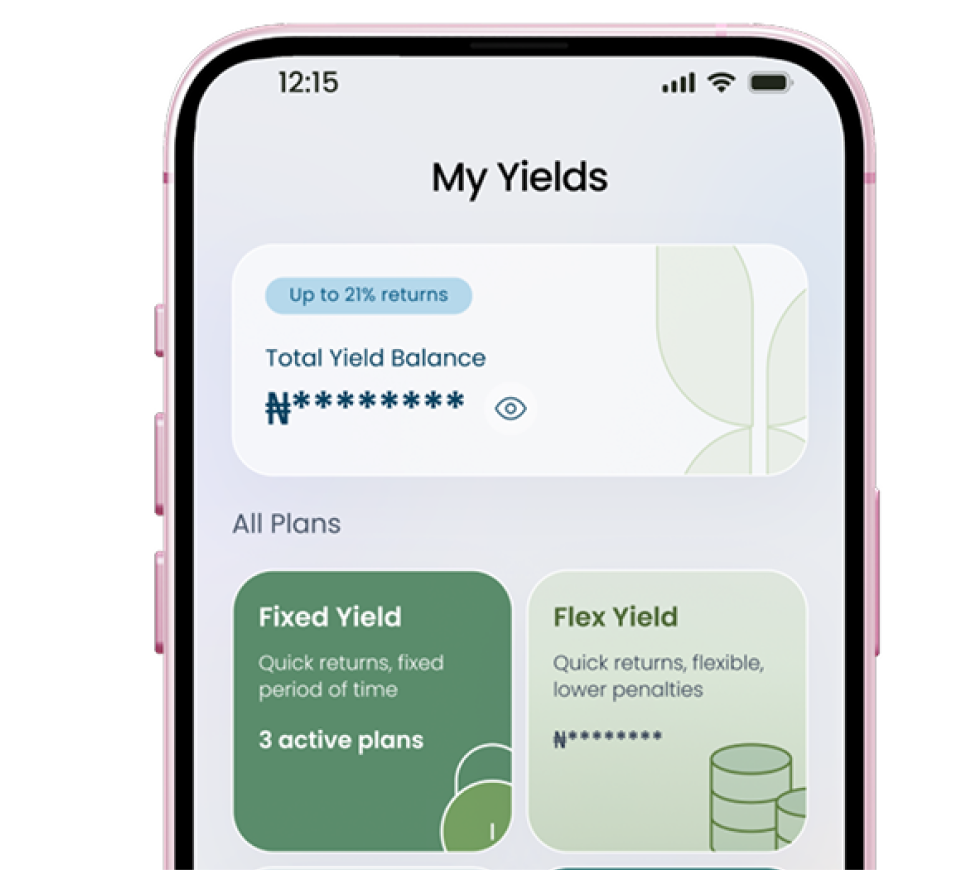
Grow your wealth at up to 21% p.a. on Yield by Credit Direct

Invest with Yield
While the best use of credit should be forwealth creation, we find that so manylow-income Nigerians are using credit to cover for basic living expenses that their salaries alone cannot cover.
Nigeria Consumer Credit Insight, 2025
BUY NOW

PAY LATER
Smartphones are the largest category of BNPL purchases, at 70% of Credit Direct Checkout gadget transactions.

Android leads overwhelmingly among mid-range devices priced at ₦130k–₦280k, which most Nigerians cannot afford in a single payment.

The AFFORDABILITY gap

The iPhone vs Android Battle is Real,
and Android is Winning

Smartphones dominate BNPL purchasing, accounting for 70% of all gadget transactions in 2025.

Android devices account for 81.4% of all smartphone purchases. This is because while there are lots of mid-range Android options priced between ₦130k and ₦280k, most Nigerians cannot afford to buy them in one payment and use BNPL to fill the gap.  

iPhone accounts for 18.6% of transactions.

Android

81.4%

Mid-range brands dominate. BNPL is the primary route to device ownership. ₦130k–₦280k typical range.

iPhone

18.6%

Fewer transactions but significantly higher ticket values. BNPL gives access to premium products.

81% Of All BNPL Phone Purchases Are For Android Phones.

Who buys via BNPL

Business Owners Treat BNPL as Asset Financing

45% of Credit Direct Checkout transactions come from self-employed individuals, compared to 29% of salaried workers. Business owners also average a higher ticket at ₦276,213, compared to ₦230,900 for salary earners. BNPL is increasingly a business procurement tool, not just a consumer product.
Self-employed

45%

Salaried

29%

OTHERS

26%

Employment
status
Gender in BNPL

Men dominate with
7 in 10 transactions

Male customers account for 68.7% of transactions, with an average ticket of ₦257,320, compared to 31.0% for female customers, with an average ticket of ₦224,422. Male customers take larger average loans (₦150,905 vs ₦122,592 for females), consistent with the gender pattern observed in the broader loanbook.
Male customers
Avg ticket ₦257,320 · Avg loan ₦150,905

68.7%

Female customers
Avg ticket ₦224,422 · Avg loan ₦122,592

31.0%

Repayment tenor

More than 6 in every 10 people choose 5-6 months

Only 2.5% of people choose to repay their BNPL loans in one month. Over 40% select the maximum 6-month tenor.
Overall, 5-6-month repayment tenors account for over 60% of all Credit Direct Checkout transactions, indicating a clear preference for longer BNPL repayment timelines.
This pattern suggests that most BNPL users are extending repayments as long as possible, due to income constraints rather than personal preference.
BNPL repayment tenor

2.5%

1 month

8%

2 months

14%

3 months

14%

4 months

18.8%

5 months

42.7%

6 months

The Future of Credit in Nigeria

The dynamics of credit delivery in Nigeria are undergoing a structural transformation, with lending increasingly embedded at the point of economic activity rather than delivered as a standalone financial product.

AI & Automation Will Transform Scoring, Risk, and Operations
Open Banking Will Unlock the Data Layer for Safer, Inclusive Lending.
Informal Sector Inclusion Will Drive the Next Wave of Credit Expansion
Risk-Based Pricing Will Become the Dominant Market Standard
Payroll Lending Will Remain the Country's Credit Stability Anchor
Non-Bank Lenders Will Capture More Household Credit Share

left wanting more?

Download the full report

Get access to the numbers that power lending in Nigeria, and examine how all the players in the ecosystem impact credit for everyday Nigeria

GENDER & ACCESS